
Native Plants for Beginners - A HerKentucky Guest Post
Today, local garden enthusiast Retta Ritchie-Holbrook shares with us her efforts to fill her garden with native Kentucky plant species. Be sure to check out her fabulous list of resources, as well. Maybe my black thumb isn't so black after all! Maybe I just need to choose more native plants!
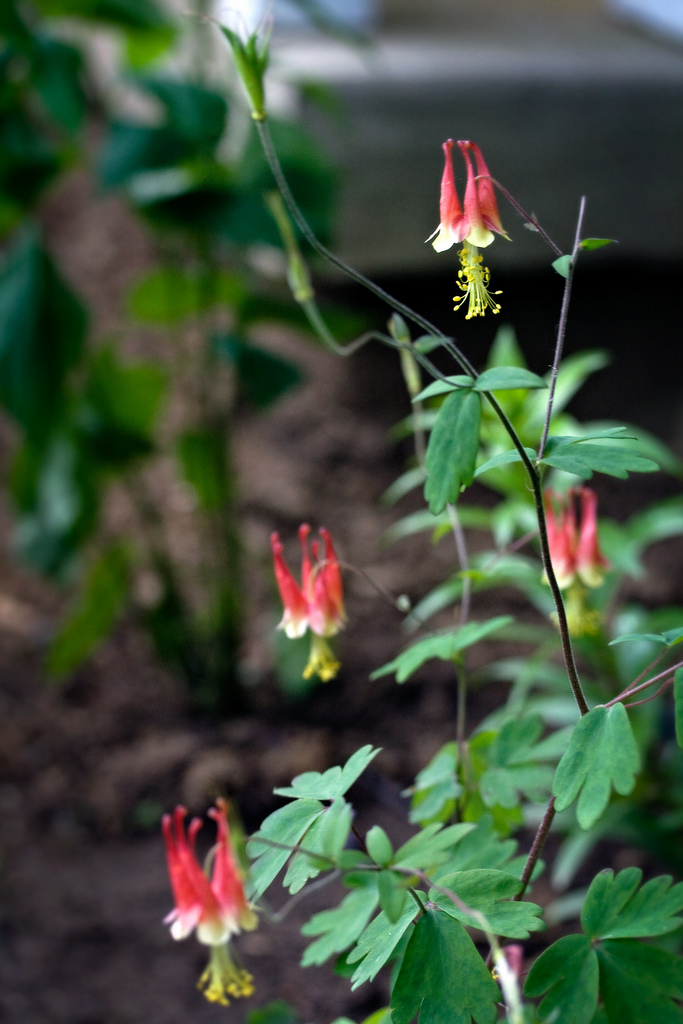 |
| One of the flowers from my friend - Wild Columbine |
My first true foray into gardening began when I bought a house and decided I wanted to make the landscape more appealing. My mother is an avid gardener and grows the most beautiful flowers. I guess you can say the desire to grow things runs in the family. The only problem was I didn’t seem to be very good at it. I would buy an array of bright, colorful plants only to watch them die. Sometimes, I would get lucky, and the plants would live for a few years until they became diseased, got pests or we would have a drought and I would miss watering them a few times because I was traveling for work. I would then have to yank them out and replace them. Gardening seemed like a lot of work and I simply didn’t have the time for it.
This process went on for a few years until a friend brought me some plants from her own garden and told me they were Kentucky native plants. I had not heard of native gardening at that time but those plants thrived and are still in my garden today. This encouraged me to learn more about native plants.
Native gardening or native landscaping is what its name implies: growing plants that are native to your area. I slowly started replacing my less hardy flowers with mostly native plants. They did so well that I began adding more and more flowerbeds with native plants and I’m currently in the process now of turning my backyard into mostly flowers and plants and less turf.
This process went on for a few years until a friend brought me some plants from her own garden and told me they were Kentucky native plants. I had not heard of native gardening at that time but those plants thrived and are still in my garden today. This encouraged me to learn more about native plants.
Native gardening or native landscaping is what its name implies: growing plants that are native to your area. I slowly started replacing my less hardy flowers with mostly native plants. They did so well that I began adding more and more flowerbeds with native plants and I’m currently in the process now of turning my backyard into mostly flowers and plants and less turf.
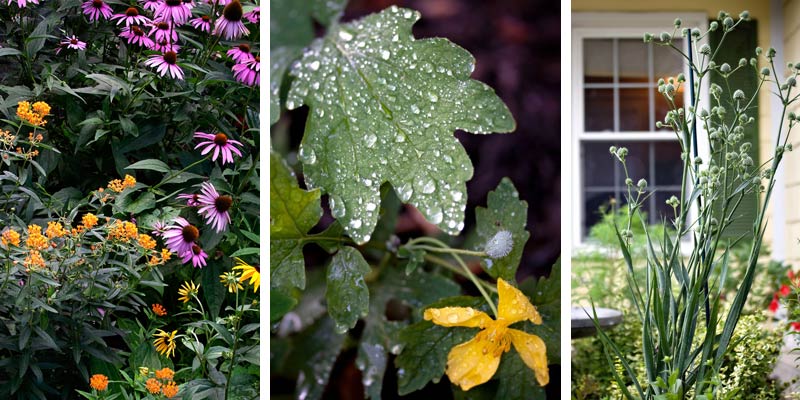 |
| In my garden, left to right: a.) Butterfly Weed & Purple Coneflowers b.) Celadine Poppy (Good in Shade) c.) Rattlesnake Plant |
Some benefits of native plants:
- They require less fertilizers and fewer pesticides.
- They require less water and often do better through droughts and other extreme types of weather.
- They provide shelter and food for wildlife. This also helps to manage the pests since wildlife feed on the pests, eliminating or greatly reducing the need for chemical pest control. I personally have not used pesticides for years.
- They are usually not invasive because they are a balanced part of the ecosystem and have natural predators.
- Native plants are beautiful, hardy and come in a wide variety of options. I recently added some native bushes, such as the spice bush, to encourage butterflies to breed there.
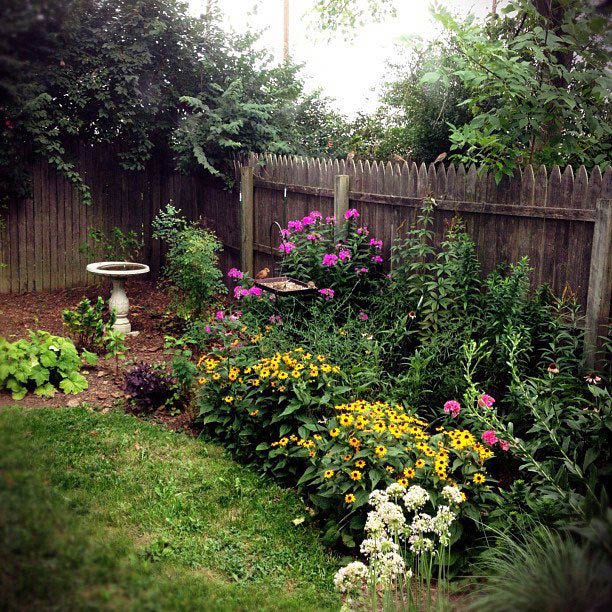 |
| One of my flowerbeds doing well even after the early summer drought. |
Because native plants are adapted to the local environment, they are easier to grow and create ecosystems for birds, pollinators and other beneficial critters. Now my yard is alive with butterflies, birds and more. I looked out the window just the other day to see a gold finch eating seeds out of the coneflower heads. I’ve seen several new species of birds and butterflies just this year alone that I had never seen in my yard before and I love it.
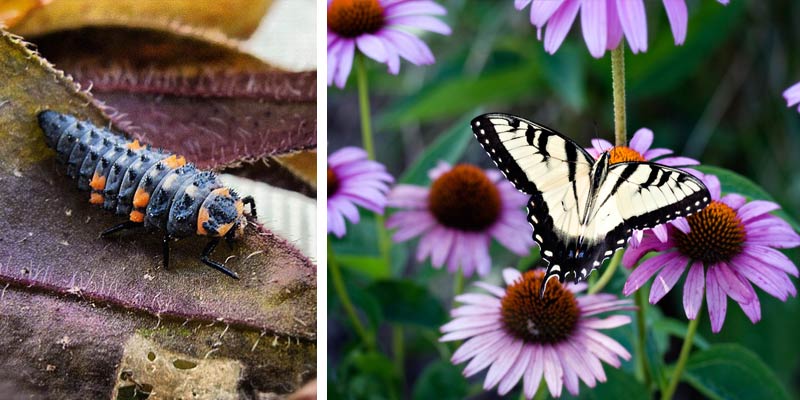 |
Left to right: a.) Lady Bug larva b.) Eastern Tiger Swallowtail |
Just a few of my favorite plants (Many of these have several varieties to choose from):
- Joe Pye Weed
- Ironweed
- Native Asters
- Cup Plant
- Goldenrods
- Garden Phlox
- Coneflowers
- Royal Catchfly
- Coreopsis
- Wild Columbine
- Black-eyed Susan
- Prairie Blazing Star
- Wild Onions
Places to visit for inspiration:
- The Salato Native Plant Programhttp://fw.ky.gov/navigation.aspx?cid=174&navpath=C130
- The Arboretum, State Botanical Garden of Kentuckyhttp://www.ca.uky.edu/arboretum/
- McConnell Springshttp://www.mcconnellsprings.org/nature.html
Online Resources for Native Plant Species:
- Wildflower Centerhttp://www.wildflower.org/collections/collection.php?collection=KY
- Kentucky Native Plant and Wildlife Blog - Tom Barneshttp://kentuckynativeplantandwildlife.blogspot.com/
- Betty Hall Photographer and Native Plant Extraordinairehttp://www.bettyhallphotography.com/blog/
Don’t miss her list of 25 Native Kentucky plants that attract birds and butterlieshttp://www.bettyhallphotography.com/resources/twenty-five-kentucky-native-plants-that-attract-birds-and-butterflies/
- Kentucky Native Plants: flickr grouphttp://www.flickr.com/groups/kynatives/
- My Kentucky Native Pinterest Boardhttp://pinterest.com/retta/ky-native-plants/
Where to buy native species:
- Shooting Star Nurseryhttp://shootingstarnursery.com/
I started my first full native plant flower bed by buying one of Shooting Star’s plant collectionshttp://shootingstarnursery.com/catalog/index.php?cPath=38&osCsid=a756ad61404d5290eb0d78a753ed07b4 - Dropseed Nurseryhttp://www.dropseednursery.com/
- Springhouse Gardenshttp://www.springhousegardens.com/
Native Plant Societies:
- The Kentucky Native Plant Societyhttp://www.knps.org/
- Wild Ones Lexington Chapterhttp://www.wildones.org/chapters/lexington/
Contact

For media, advertising, or sponsorship inquiries, email us: herkentucky@herkentucky.com.
For editorial suggestions, questions, or comments, email Heather: heather@herkentucky.com.
Tailgating Wishlist
Two weeks 'till football, y'all. I don't know about you, but I've had enough pool time and miserable heat. I'm ready for cooler temperatures, pumpkin spice lattes, and SEC football. Just think -- we have two more teams to follow this year! As we head down the home stretch, I've put together a little tailgating wishlist. Most any Wildcat fan will find something they need here.
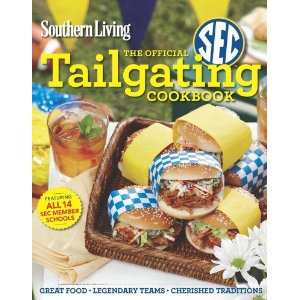
I can't wait to try Southern Living's brand-new Official SEC Tailgating Cookbook. Great food and great football tradition -- this promises to be a perennial fall favorite.
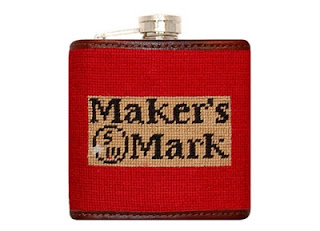
Of course, I would never slip bourbon into the stadium. But, this Smathers and Branson needlepoint flask is a rather stylish way to do so, if one were so inclined.
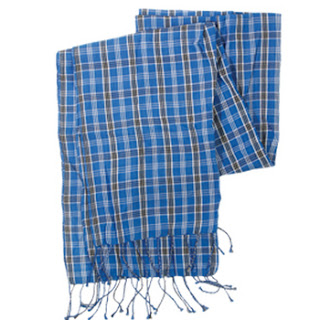
LOVE the Wildcat Plaid. This scarf is a stylish, understated way to rep the 'Cats at work or a tailgate.
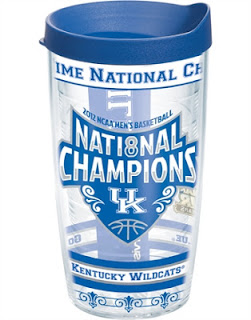
These National Champs Tervis Tumblers are a must. They keep your drink magically cold, and they commemorate the best day of 2012.

This gorgeous Maxi dress from Modcloth is stylish and looks so comfortable. And, of course, is just the right shade of blue.
Two weeks. Go 'Cats!
Tradition and Change at Transylvania
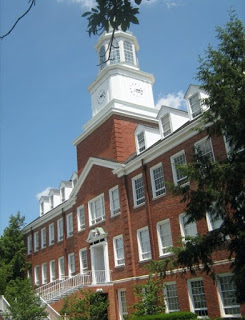
Every so often, I hear of a big change at my alma mater. A newspaper article, the alumni magazine, or a piece of gossip from a friend clues me in to something new and different at the old school. Sometimes it's interesting and exciting. Sometimes, it's perplexing. And, more often than not, it just feels a little unsettling. That just isn't how things are supposed to be.
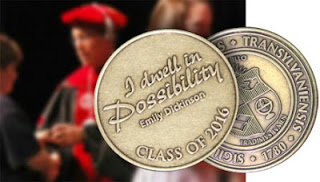 |
| via Transylvania University. |
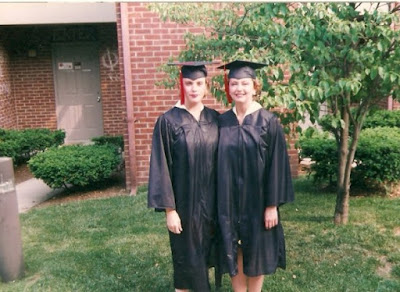 |
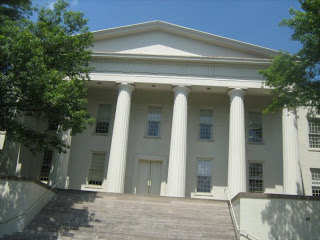
| I like to believe this is the last moment that Transy made any changes. |
 |
| I spent four years locked in this basement. |
From the moment you enter Transylvania's campus, you're immersed in over two centuries of culture and history and tradition. Everywhere you turn, there's a reminder of famous names of Lexington's past -- the troublesome architect Shryock brothers, the mad genius Constantine Rafinesque, the infamous Belle Brezing. It's easy to lose yourself in the idea that things have always been the same at old TU. But, it's simply not true. My Transy experience is undoubtedly different than John Marshall Harlan's was in the 1850s, or Ned Beatty's in the 1950s. And, as a friend and fellow alumna recently reminded me, my experience is a good bit different than the current students'. To be fair, I suppose most Transy kids aren't listening to Nirvana and wearing plaid Abercrombie shirts these days. And that's a very good thing.
A couple of years ago, I found myself at a wedding reception at Graham Cottage, Transy's alumni house. As the festivities drew to a close, I jokingly texted some Transy girlfriends that I was thinking of crashing some fraternity parties while I was on campus. It was Saturday night, after all. Now, of course I knew that none of the guys on the halls wanted to deal with a thirty-something retired sorority girl busting up in one of their parties. Nor did I think that my palate was exactly up to the bitter, hoppy notes of Natural Light or Milwaukee's Best. (An anthropology thesis could be written on the complexities of each fraternity's choice of crappy beer, but that's another story for another time...) Sitting in Graham Cottage, looking out the window at the dorm-dwellers gearing up for Saturday night, I felt like I was 21 again -- young and carefree and pretty. (OK, probably not as pretty as I thought. See, e.g., Natural Light.) I didn't want to think about the fact that some classmates' dreams came true, while others' didn't. I didn't want to recall that a few folks aren't still with us. It was a convenient fiction to tell myself that the parties were going on just as I remembered. It's simply nicer to believe that things are exactly as I left them.
Bad Decisions and Good Conseqences
We've been talking a lot about school recently here at HerKentucky. We've discussed selecting the right schools for our kids and for ourselves. We've talked about making the right decision during sorority rush. In a way, we've focused on the best decisions of our school experiences.
 |
| Holly's book is great. Even Oprah thinks so. |
But, for every really good decision, there's a really bad one. Today, on Salon.com, Kentucky-born author Holly Goddard Jones talks about her decision to get married as a nineteen year-old University of Kentucky sophomore. There were no shotguns involved, nor rebellion. Instead, Ms. Jones tells us, she was following her boyfriend to Lexington and she didn't want to let her daddy down by "living in sin." It was a tough decision, she notes, and one which left her socially isolated on campus. Now, Ms. Jones argues on her thirteenth wedding anniversary, it ultimately turned out to be a great decision both personally and professionally. Her "biggest mistake" didn't turn out so bad.
A few years ago, I had the pleasure of interviewing Ms. Jones for Ace Weekly. From that experience, I can tell you that her commitment to hard work, good storytelling, and generally being a lovely person shines through, as does her adoration of her husband. To hear that her "bad decision" turned out to be a blessing certainly warms my heart. It's certainly a story that resonates with a lot of small-town Southern girls: making the difficult choice in order to fulfill family expectations.
In her Salon piece, Ms. Jones wistfully notes:
I would be lying, of course, if I claimed that I have not had moments of
depression and doubt over the years, wondering about the course of that
parallel me, the one who did not get married. I wonder who I would have
become if my roots weren’t planted so closely to my husband’s, so that
the two of us have grown not just up but together, into an
interdependent being with the same home and habits, many of the same
memories and broad life goals, the same jokes and turns of phrase.
 |
| I question this undergrad hairstyle. |
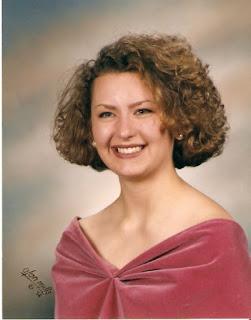
I think we've all been there. Every decision we make from the ages of 18-25 holds consequences for every subsequent day of our lives. Most of us have wondered if things would have been a little different if we'd chosen a different path, yet we don't want to negate the good consequences of the paths we took. What if I'd finished that application to Yale? I often ask myself, then realize that I wouldn't have met my beau or many of my besties. What if I'd chosen a different field of study or moved to New York, like I always dreamed? Like Ms. Jones, I ultimately decide that, had I done any of these things, I just wouldn't be me.
We'd love to hear from y'all. Have you ever made "bad decisions" that turned out to be great ones?
HerKentucky Story: Writer Megan Whitmer
Today's HerKentucky Story spotlights Lexington-based writer Megan Whitmer. I had the pleasure of meeting Megan this spring when her brother married my cousin/BFF. Megan is exactly the kind of person you'd hand-pick to add to your extended family -- smart, creative, cool, and unique. And she has two of the cutest little girls I've ever seen! I hope y'all enjoy getting to know Megan as much as I have! -- HCW
Megan Whitmer grew up in Lancaster, KY and currently lives in Lexington. She attended Transylvania University and the University of Kentucky, and holds a bachelor's degree in psychology. When she's not working on her novel, Megan spends her time playing dress-up with her two daughters, drinking absurd amounts of Cherry Coke Zero, and wishing someone would pay her to tweet.
You can learn more about Megan on her blog, or follow her on Twitter.
Every time I tell someone I’m a writer, I get two questions: 1. A real one? 2. Have you written anything I might have read? (Answers: 1. No, I’m imaginary. 2. Probably not. Yet.)
Megan Whitmer grew up in Lancaster, KY and currently lives in Lexington. She attended Transylvania University and the University of Kentucky, and holds a bachelor's degree in psychology. When she's not working on her novel, Megan spends her time playing dress-up with her two daughters, drinking absurd amounts of Cherry Coke Zero, and wishing someone would pay her to tweet.
You can learn more about Megan on her blog, or follow her on Twitter.
Every time I tell someone I’m a writer, I get two questions: 1. A real one? 2. Have you written anything I might have read? (Answers: 1. No, I’m imaginary. 2. Probably not. Yet.)
 I’ve written three books. The first was in elementary school, a picture book called Honey I Flunked the Squids. The second was many years later, and so ridiculously unmarketable I don’t even want to tell you about it. My latest is the first with a real chance at being published. It’s a young adult fantasy called Between, and you can read the first couple of pages of it on my blog.
In case you don’t know, getting a book published isn’t as easy as Amazon would have you believe.
1. You write a book.
2. You send query letters to literary agents telling them about your book and asking them to represent your work.
3. They say no.
4. You keep trying. You hear stories of people who query agents for a day before they find someone who loves their book. You hear stories of people who queried for months. You take comfort that some bestsellers were repeatedly rejected before finding an agent. You reread your book and convince yourself it’s crap. You read it again and call yourself a genius.
5. If you’re lucky enough to find an agent who thinks your book is publishable, he or she will shop your book to publishers.
6. Hopefully, an editor at one of those publishing houses will read it, love it, go through a painfully long process involving editorial boards and marketing teams, and then your book will officially be on its way to bookshelves. (Or not. There’s no guarantee that your agent will be able to sell your book to an editor. But we’re going to ignore that piece of reality for the sake of my mental health.)
I’m currently hanging out in step four. There are nearly 350 agents who represent the kind of book I wrote. I queried about 50 of them before I decided to stop.
After I finished Between, I spent six months reading some really incredible manuscripts, and I realized that my book was nowhere near ready. It needed so much work that a simple revision wouldn’t cut it.
It needed an autopsy. I needed to take it apart and put it back together again, figure out what parts worked and what didn’t, and at that point, I did the unthinkable.
I deleted every word.
I could’ve written a new book. After all, if you’re starting at page one, doesn’t it make sense to just write a brand new book? I have a few other story ideas I could’ve put my sweat and tears into, but I couldn’t let go of Between. I’m so in love with my characters, and I didn’t want to feel like I hadn’t done everything I could for them.
So I wrote Between. Again. It took three months of around-the-clock writing. I deleted one character completely, changed the ending, had one of my most loved characters die, and amped up the kissing. (When in doubt, always amp up the kissing.)
I thought about quitting at least twice a day. In the hardest moments, when my brain was completely broken and I was sure all my words were stupid, I questioned the point of it all. Between wasn’t getting many bites from agents. Young adult fantasy is the hardest genre to break into. Why was I sacrificing sleep, meals, and time with my family for a book that might not get me anywhere?
Then I reached The End. For the first time, I feel like my book is really and truly complete. It’s everything it needs to be.
You know what? Between might never land me an agent. But at this point, I know if it doesn’t get published, it’s not because I didn’t give it everything I had. It won’t be because I was afraid to start over. None of my books will ever make it to a bookshelf if I’m afraid of looking at a blank page.
I (Heart) School
My year begins with the school year. Even when I lived in D.C. and no one in my home went to school, the school year was how I organized time. The beginning of school represents a fresh start. The beginning of school means new clothes and unopened packages of pencils and crisp stacks of paper. The beginning of school represents opportunity - the opportunity to learn something life-changing, to succeed at something new, to finally do things right.
I love everything about it because I love everything about school. Elementary school was fun. Middle school was hilarious. High school was dramatic, but COLLEGE was the best four years of my life.
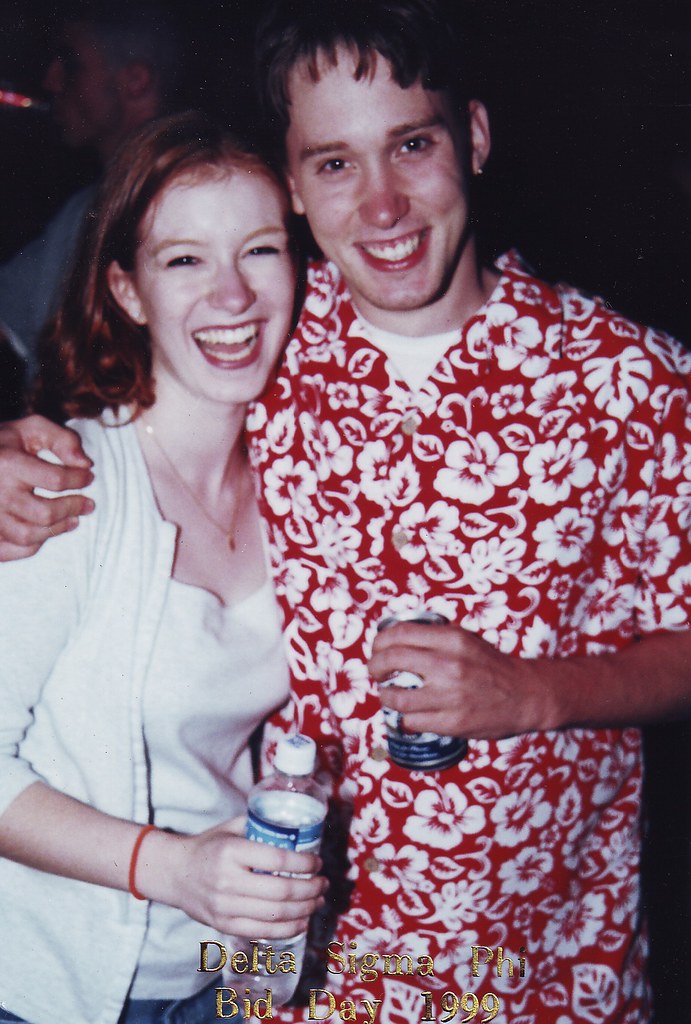 |
| That girl on the left has NOT a care in the world. The guy on the right is now a PROFESSOR, which makes the girl on the left feel very old indeed. |
I know I shouldn’t say that. I truly do love my life now. I have the most amazing husband and the most adorable children and the coolest jobs. But you know what husbands and children and jobs are most of the time? WORK. You know what isn’t WORK?
COLLEGE.
College is just enough structure and just enough freedom to be the best. thing. EVER. Even the start of school at college is better. My favorite day in the world is Syllabus Day - the first day of class when the professor hands out the syllabus, goes over it quickly, and lets every one go. No homework. No preparation. Just a crisp sheet of paper that tells you everything you’re going to learn over the next few months. Nothing is late yet. You haven’t procrastinated. Everything seems so achievable.
I celebrated many a Syllabus Day during my four years at Transylvania. I decided to go to Transy because my high school boyfriend was in Lexington and I didn’t want to go to UK. The worst decision-making that luckily led to the best decision of my life. When I look back on my life, my four years at Transylvania were the most transformative.
I learned how to be a good friend. I learned how to be a good liberal. I learned how to write and think and debate. I met my husband, my dearest friends, and mentors that single-handedly changed the course of my life.
The best part? All that changing and learning and transforming was so much dang fun. Sure, there was drama. That high school boyfriend cheated on me with a sorority sister. I did not graduate with all the dear friends I had made freshman year due to conflicts and miscommunications. I still vividly remember the torture of writing ONE MORE political philosophy essay for Dr. Dugi after Spring Break. At the time, it seemed like the most difficult task in the entire world.
Of course, it wasn’t. I knew deep down it wasn’t. By graduation, I already knew how special my time at Transylvania had been. Others whined and complained. They couldn’t graduate fast enough. Not me. I knew this time was special and I didn’t want it to end.
At graduation, underneath those seemingly perfect cherry trees, I cried like a baby. Sure, I cried for the friends I was leaving and the mentors I was hugging one last time. However, I knew I’d see and talk to all of them again. I cried the hardest for Transylvania and those incredibly special four years I knew I would never get back.
I cried that May because come September I knew another school year would start at Transylvania ... and I would not be there.
~ Sarah Stewart Holland