
Chicken Noodle Soup
Warm up with this classic soup!
A snowy day calls for homemade chicken noodle soup. There's nothing better on a cold day, or when you're feeling under the weather!
I always work from this basic recipe
- 3-4 Bone-in, skin-on chicken breasts
- 1 large (16 oz) bag wide egg noodles
- 4-5 carrots
- 4-5 celery stalks
- 1 onion
- 4-5 garlic cloves
- 1 stick of butter
- salt
- pepper
- olive oil
- garlic powder
- 1 lemon, juiced
- parsley for garnish
- Season chicken breasts with salt, pepper, garlic powder, and olive oil to taste. Place in a large glass baking dish and cook at 375 for 25-30 minutes or until completely done.
- Shred chicken meat, reserving bones, skin, and pan drippings.
- (If using boneless/ skinless chicken breasts, skip this step and use 1 box of pre-made chicken stock) Place chicken skin and bones in dutch oven. Deglaze the baking dish and add pan drippings to dutch oven. Add sliced onion, garlic cloves, 1 carrot, and 1 stalk of celery to dutch oven. Cover with water, bring to a boil, then let simmer for 1/2 hour. Add butter and salt and pepper to taste.
- Remove solids from stock mixture. Add shredded chicken and 3-4 chopped carrots and 3-4 chopped celery stalks.
- Add egg noodles and cook at medium-high heat until the noodles are cooked to taste.
- Add lemon juice; season to taste and add chopped parsley

Martin Luther King, Jr. and the 1964 March on Frankfort
Martin Luther King, Jr.'s lasting legacy in the Bluegrass State
In 1964, Kentuckians were fed up. It was time for citizens of the Commonwealth to be treated fairly. The winds of civil rights reform were blowing across the nation, and citizens of the Bluegrass State were ready for a change.
Frank Stanley, Jr., editor of the Louisville Defender newspaper, organized the March on Frankfort. Stanley recruited baseball legend Jackie Robinson, folk singers Peter, Paul, and Mary, and activist Martin Luther King, Jr. to attend the March, which was held on March 5, 1964.
The following day, the Courier-Journal reported that "The marchers and singers — from the coal mines of Appalachia, the bluegrass of Lexington, the factories of Louisville, the cotton fields of the Purchase — came to press for passage of a stiff and workable public accommodations bill."
Dr. King's speech noted that the crowd had gathered to "challenge the immorality of the social system that permits segregation." His repeated refrain in his stirring speech was that "Now is the time" for change. The March is credited as a catalyst for the passage of the 1966 Kentucky Civil Rights Act, which Dr. King called "the strongest and most comprehensive civil rights bill passed by a Southern state."
For this impact on our Commonwealth, as well as Dr. King's legacy which still resonates throughout our nation fifty years later, we say Thank You, Dr. King!
My Kentucky Tee Bless Your Heart Giveaway
I absolutely love My Kentucky Tee! They're a subscription service that sends a Kentucky-themed tee shirt to your door every month, and the upcoming February tee is just amazing. How Southern and hilarious is the saying "Bless Your Heart"? I mean, everyone knows what you're saying there.
HerKentucky has partnered with My Kentucky Tee to give one lucky winner a Bless Your Heart tee. Just enter to win below!
January Book Club, Part I: The Undertaker's Daughter and Kentucky
Welcome to the HerKentucky Book Club!
January's book is The Undertaker's Daughter by Kate Mayfield. Oh my goodness, did I love this book! It's so quirky, and so quintessentially Kentuckian!
This is such a fun and fascinating book, and I did feel that, even though it could be enjoyed by a very wide audience, there are aspects of the book that are perhaps best appreciated by those of us who've grown up here in the Bluegrass State. So, the format for Book Club this month will be two posts: this week, we'll focus on the Kentucky connections to The Undertaker's Daughter; in two weeks (Thursday the 28th), we'll focus on more thematic, traditional book club questions. Please feel free to comment below, and encourage your friends to pick up with us for the month's second post!
Here are the thoughts and questions that arose for me as I read the book. I'd love to hear your perspective on any of these themes, as well as any discussion you'd like to start! Feel free to discuss in the comments section below this post!!
1. I absolutely loved this passage from Chapter 2: "There were no Appalachian Mountains in this town, nor coal miners, hillbillies, or holler dwellers. Neither were there white fences bordering exclusive horse farms, nor tony Derby breakfasts. It was just a sleepy, little tobacco town..." Did you, as a reader, feel that this description set you in mind of a very specific corner of Kentucky?
2. The story is set in the fictitious Jubilee, in Beacon County, near Lanesboro, yet it isn't all that hard to figure out which Southern and Western Kentucky towns the author is actually referencing. Did you find that this slight fictionalization within the memoir was distracting? Were you googling to see where Mrs. Agnes Davis and the Bibb House Museum were actually located?
3. The Undertaker's Daughter is set in a truly bygone era. I found myself thinking of Southern novels like The Divine Secrets of the Ya-Ya Sisterhood and The Help in everything from the Jubilee townspeople's views on race to the ladies' devotion to hairspray and proper bridge party food. Lily Tate and her friends' views on Northerners and Catholics felt exclusionary, while the townspeople's views of African-Americans were outright racist. Do you feel like this is an accurate depiction of the attitudes in small Kentucky towns in the 1960s? Do you think things have changed in the past 50 years or so?
4. The depiction of small-town Kentucky life in The Undertaker's Daughter was realistic felt very believable that everyone in Jubilee knew each other's business and the middle class folks gossiped about the Country Club set. Because of this, I often found myself (also a small-town Kentucky girl) gasping when the narrator told her family's secrets. As a writer, I often have that reaction to memoirs that air the writer's dirty laundry, like the works of Pat Conroy. Did you find the small-town setting made the author's revelations of family mental illness, substance abuse, and infidelity more shocking?
5. There's a great line early in The Undertaker's Daughter where the narrator vows that she will not become one of Beacon County's widows. Time and again, she references getting out of Jubilee and making a life for herself elsewhere. Could you relate to young Kate's desire to flee small-town Kentucky and see the world? Were you surprised to learn that she now lives in England?
I can't wait to hear what y'all have to say about these questions, or any other thoughts and ideas you may have about the book!
Layering for Cold Weather
Stay warm in style!

A note from HerKentucky: While we all love to shop, please remember those who may not have the luxuries that we enjoy. If you do buy new cold weather gear, please remember that your gently used or unworn blankets, hats, scarves, and coats could, quite literally, save a life this winter. Donate to the shelter of your choice, and please consider patronizing businesses like Lexington's Morton James, who are helping to warm the less fortunate with a donation drive.
Oh my word, y'all. It is so cold out there! Temperatures in the teens and twenties are hard to dress for. I've found myself heading out to run errands or take meetings this week and putting on ALL THE LAYERS to stay warm. There's an art to layering without adding unnecessary bulk to your ensemble.
Step 1: Base Layer
Start with a smooth base layer to trap heat. I've got my eye on this wool blend layer from L.L. Bean.
Step 2: Sweater
Add a thin sweater in a natural fiber like merino wool or cashmere for maximum warmth without compromising comfort. This time of year is THE BEST for finding post-Christmas sweaters at a great price. I snagged a cashmere crewneck at Macy's for $23 last week!
Step 3: Puffer
Add a quilted puffer jacket for maximum warmth. I'm on the lookout for a longer, parka-style puffer for all-over warmth!
Step 4: Add a hat!
Hats are the key to staying warm in low temperatures. They trap heat, even if they do wreak havoc on your hairstyle.
Step 5: Scarf and Gloves
Scarves and gloves are crucial this time of year!
Stay warm out there, y'all!
Happy Hot Toddy Day!
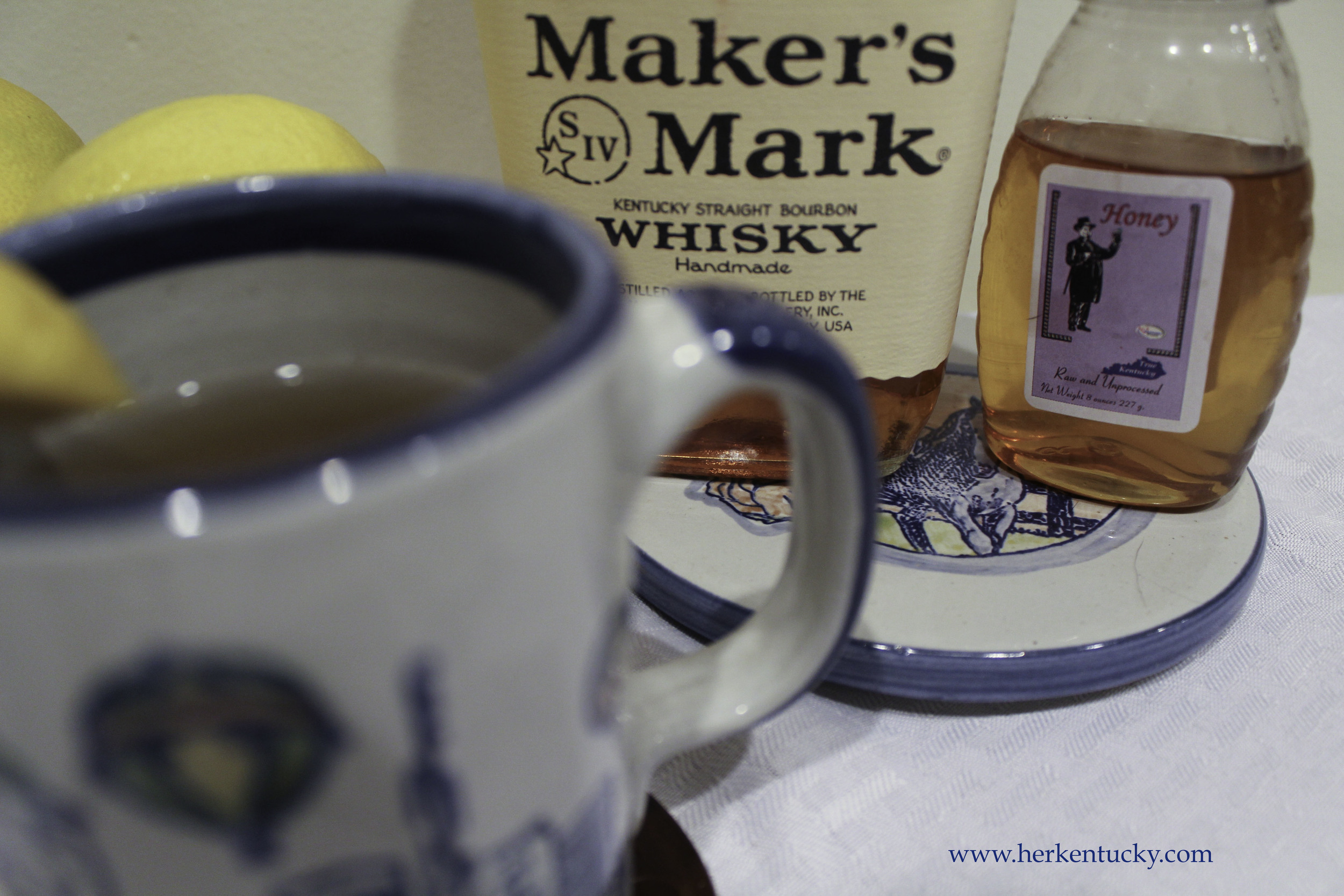
Beat the chill with a Maker's Mark Hot Toddy!
Today is National Hot Toddy Day, y'all! Between the cold weather and all the nasty viruses that are going around, it seems like a good day to celebrate. So, grab a bottle of your favorite bourbon (I like Maker's Mark for this one!), some local honey, and a lemon and enjoy!
- 1 oz bourbon
- 1 oz steaming-hot water
- Local honey
- 1 lemon
Put a kettle of water on to boil. Drizzle honey in the bottom of coffee mug. Pour in one ounce bourbon, or to taste. Squeeze juice of 1/4 lemon into mug. Pour in hot water. Add additional bourbon and/or hot water to taste.
Cheers, y'all!
5 Words You're Saying Wrong if You Aren't A Native Louisvillian
Louisville has its own language more than any other Kentucky city. Here's a few words that only natives know how to say propertly.
Seelbach: Pronounced in Louisville as Seel-bæk to rhyme with the synonym for spine; pronounced by everyone else as Seel-bahk to rhyme with family of German composers. The storied downtown hotel where Fitzgerald's Daisy married Tom Buchanan. Now a Hilton property, but nobody mentions that part either.
Valhalla: Pronounced in Louisville as Vaal-haal-a, with the first two syllables rhyming in their very long a's; pronounced elsewhere as Vaal-ha-la, with the middle syllable sounding like an exclamation for a mildly funny joke. It's the real deal PGA golf course; it may also have something to do with Greek mythology.
School: The pronunciation is pretty standard -- skōōl -- but somehow native Lousivillians intone the word to indicate that they're precisely referring to high school. Where did you go to school? usually leads to a discussion of private vs. public schools.
Benedictine: Another word with a standard pronunciation, but with vastly different meanings. To the rest of the world, it's an order of Catholic monks, or the herbaceous liqueur originally produced by those monks. Here in Louisville, it's a green sandwich spread.
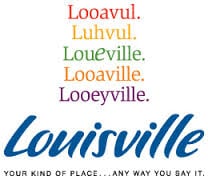
Louisville: Perhaps the most disputed word of all. Kentuckians know it's Lew-a-vill. We've heard "Leweee-ville", "Lou-vill", and all sorts of foolishness.
Did we leave any out?