Traditions, HerAppalachia Heather C. Watson Traditions, HerAppalachia Heather C. Watson

Route 23

Built in 1926, U.S. Route 23 was conceived as a North-to-South highway spanning from Detroit to Jacksonville.  Unlike the sleek, efficient Interstate Highway System that would later come into vogue, U.S. 23 and its contemporaries meander through small towns across the country.  It offers few tourist activities, and the scenery is usually pretty modest -- small homes, even smaller post offices, and the errant law office -- but for Eastern Kentucky natives, Route 23 is so much more than a road.  It's a symbolic journey to economic improvement, a sentimental drive home, and the birthplace of country music royalty.  It's a lesson in industry, and economics.  It's the road we take when we run away, and the road on which we inevitably return.
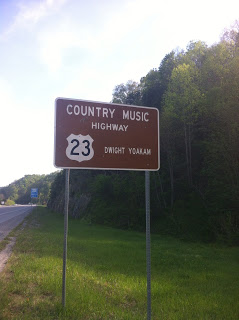
U.S. 23 winds through the heart of Eastern Kentucky, coming in from Virginia at Jenkins and stretching north to Ohio along the river bank in Ashland.  This 144-mile stretch traces the journey of Kentucky's coal industry -- from the coal mines in the heart of the region to the tipples and factories in the more industrial Northeast corner of the state.

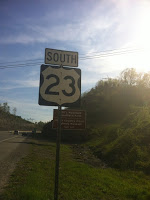
Near Prestonsburg on U.S. Route 23.

For Appalachia natives, this stretch of road is known mainly as the road to the factories of Ohio and Michigan.  To our uncles and grandfathers, it was the road to a better life.  Jobs at the Detroit automotive factories lay at the Northern tip of Route 23; my own family history is filled with stories of carloads of young men leaving the hollers and making the trek north.  After graduation in the '50s and '60s, few job prospects arose in Appalachia.  It was only in researching this piece that I learned that Route 23 was known as a Hillbilly Highway for the escape route it provided young Appalachians seeking a better life.  I certainly did know, however, that the lyrics to Floyd County native   Dwight Yoakam's 1980s hit "Readin', Rightin', Route 23" rang true to so many of our friends and family. 

In the years since Dwight first sang his powerful tribute to Route 23's legacy, the Kentucky portion of the road has been nicknamed the Country Music Highway , since a famous country music singer hails from every county along the stretch.  Road signs along each county mark these famous sons and daughters, and a Paintsville museum commemorates their work.  The road commemorates the rockabilly sound of Dwight Yoakam, the haunting ballads of Keith Whitley, and the virtuoso performances of Ricky Skaggs.  The Queen herself, Loretta Lynn, is honored, as are the Judds.  There's even a sign denoting the hometown of singer/actor Billy Ray Cyrus, if that's your thing.
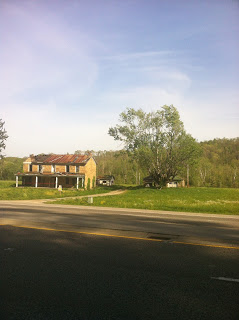
Abandoned farmhouse along US 23, Louisa

Route 23 has remained virtually unchanged for as long as I can remember.  It's an old road going through old towns.  It isn't the kind of road that attracts golf courses, shopping centers, or subdivisions.  It's a slice of old Americana virtually preserved in amber.  Recently, however, the stretch of 23 running through Johnson and Lawrence counties was affected by an intense tornado.  Homes were tragically destroyed, as were many fields and hillsides. Sections of Route 23 now present heartbreaking scenes -- homes are destroyed and hillsides demolished.  Yet, for Eastern Kentuckians, the road has always been about hope.  It's the promise of a better future.  It's the road to prosperity and better times. 

________________________________________________________________________

Stars of the Country Music Highway:

Billy Ray Cyrus — Flatwoods

The Judds — Ashland

Tom T. Hall — Olive Hill

Keith Whitley — Sandy Hook

Ricky Skaggs — Blaine

Hylo Brown — River

Loretta Lynn — Van Lear

Crystal Gayle — Van Lear

Dwight Yoakam — Betsy Layne

Patty Loveless — Elkhorn City

Gary Stewart — Jenkins

Read More

Ashley Judd does Kentucky proud


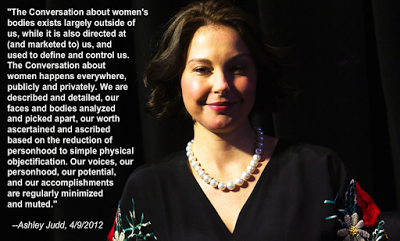
Ashley Judd recently wrote a piece for The Daily Beast addressing speculation over why her face has appeared puffy. She gets right to the point in the first sentence. “The Conversation about women’s bodies exists largely outside of us, while it is also directed at (and marketed to) us, and used to define and control us.” As a former women’s studies major, it was all I could do not to stand up in the middle of my living room and shout “AMEN!”

However, I feel pretty confident not all Kentuckians will feel the same way about her feminist critiques. Kentuckians have a complicated relationship with Ashley Judd and I believe that relationship only further proves her point.

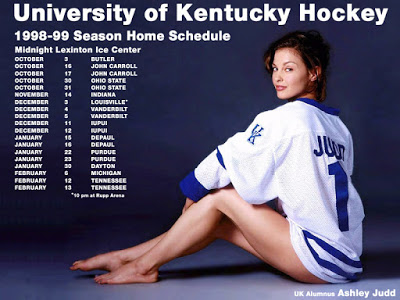
I remember the first time I learned Ashley Judd was from Kentucky. It was probably when I realized she was a JUDD Judd - daughter/sister of the famous country music duo. I felt such pride. She was so beautiful, so talented, so articulate. I loved that she was from my home state. Even though I'm not a huge sports fan myself, I loved that she was such a passionate UK fan, always making her way home for big games. And of course, we ALL remember the famous hockey team poster.

Yet, as her celebrity grew, so did her political consciousness. It quickly became clear that Ms. Judd leaned  more to the left on the political spectrum. She also became an outspoken feminist - unafraid to speak her mind on controversial issues like abortion and most recently the objectification of women in the media.

(Side note: I met Ashley Judd at pro-choice march in Washington, DC, and she was nothing but incredibly kind and gracious to me...especially when I told her I was from Kentucky.)

Suddenly, I began to notice not every Kentuckian experienced the pride I felt when talking about Ashley Judd. People would criticize her outspokenness and say nasty things about her appearance or personal life. In fact, the place I noticed the most vitriol was among UK fans. You want to read some mean, nasty stuff about Ashley Judd? Go to a UK fan board.

It is almost as if Kentuckians feel they own Ashley Judd. But we don't. We have no more right to criticize her than a citizen of any other state. The truth is people's dislike of her has little to do with Kentucky and more to do with the subject of her essay - patriarchy.

Everyone (in Kentucky or anywhere else) was fine with Ashley Judd as long as she followed the #1 rule for women as "objects" to be enjoyed - you are to be seen and not heard. When she was the stunning actress who just happened to love UK, everything was fine. When she opened her mouth and started challenging things and making people (men and women) uncomfortable, the meanness began.

You know what's funny? I don't hear the same vitriol directed at George Clooney. Also a proud Kentuckian and incredibly physically attractive person, you'd think he'd be subject to the same rules. However, Mr. Clooney is just as liberal if not more so and he has said just as revolutionary things about women in the media. Yet, people seem much more comfortable with George Clooney saying things they disagrees with. I would argue it's because they don't see Clooney as an object they have some ownership of or power over.

Either way I am still proud Ashley Judd is from my home state. In fact, with every political statement or feminist critique, my pride only grows.


~ Sarah Stewart Holland
Read More

Ashley Judd, Misogyny, and Me

Ashley Judd and I have a lot in common. She’s only a few years my senior, and she grew up about 80 miles north of my own Eastern Kentucky hometown.  We were both sorority girls in Lexington and are fanatic about the University of Kentucky’s basketball team.  Our paths overlap in that “we almost know each other” way that connects many Kentuckians: her great-aunt and uncle lived next door to my own great-aunt and uncle in a suburban Lexington neighborhood for decades, I know plenty of people who knew her in her UK Kappa days, her hometown is quite near my beau’s, etc.  I pride myself on being a Kentuckian, and Ashley Judd is one of the Commonwealth’s most famous daughters.  Needless to say, I’ve followed Ashley Judd’s career quite closely over the years.

When Ashley’s manifesto about women’s bodies and misogyny appeared on the Daily Beast Monday, I took notice.It was hard not to notice, to tell you the truth.My twitter stream and Facebook feed were filled with female friends applauding Ms. Judd. People forwarded me the link to the article again and again. As nearly everyone knows by now, Ashley Judd appeared on a Canadian talk show in March and her appearance was dissected by a number of entertainment media sources which cited her “puffy” appearance.Earlier this week, Ms. Judd took to the Daily Beast website to discuss the societal implications of the criticism she’d endured.  Now, I read the article with trepidation, for I’ve often found her writing and socio-political stances to be a bit grating. And, I have to say, I was exceptionally torn, both by the message she presented and by my own response. 

As I read the article, I found myself cheering Ms. Judd’s defense of herself and her looks.  It was a subject that hit painfully close to home.  A day earlier, at Easter dinner, I’d found myself cringing as some relatives clumsily and tactlessly “complimented” my recent weight loss.  I didn’t want to explain that I am coming off an emotionally difficult year, which had been capped off by a month-long bout with bronchitis and a week’s worth of debilitating stomach pain.  I didn’t want to acknowledge the tacit implication that I'd needed to lose some of the weight, nor did I want to deal with my grandmother’s admonition that I didn’t need to lose any more.  I tried to graciously shrug off those statements in the spirit of family and holiday, but they hurt my feelings.  As I read Ashley’s defense of her recent steroid treatment for a sinus infection, I empathized deeply.  Not only had I just felt the need to defend myself against weird back-handed compliments, I had also recently dealt with the “Wow, you look like shit” comments when receiving a similar drug regimen.  I didn’t need the added stress of external criticism, and I could certainly understand the points Ashley raised in her own defense.
Now, I thought that Ashley's Daily Beast article was a little formal and academic for the pages of a political tabloid.  The use of “inter alia” is perhaps not fitted to The Daily Beast’s readership,  but I’m guilty of the same writing crimes.  When I feel defensive, or when I feel I’ve been challenged, I also tend to become verbose.  I sometimes cringe when I look back at some of my earlier published work; I was immediately reminded of this fact as I read Ashley’s article.  This is a woman who has been hurt by her critics in a very personal attack, I thought. She is smart and accomplished, and she wants to fire back with the tools at hand.  In her case, it’s a brand-new MPA from the Harvard K-School.  As always, Ashley Judd presented herself as a hyper-reality version of me.  It would make for a neat little story about the sisterhood and solidarity of Kentucky women if I ended this essay here, except for one small problem: I was one of the people who called Ashley “puffy.”
On March 17, as most of y’all know, the UK basketball team played a tough, tight game against Iowa State in the second round of the NCAA Tournament.  In a weekend fraught with upsets, the outcome seemed fairly dubious for a moment.  Nobody wanted to look away from the game for second.  And yet, there it was – a break in play coverage to interview our Most Famous Fan.  The truth is, I didn’t care what Ashley had to say about being in the Yum! Center, or about the team’s style of play.  I just wanted to watch the game.  As I recall, a crucial foul was not shown (y’all refresh my memory – it may have even been a technical?) because we were cutting to an interview with Ashley Judd.  In my frustration and anxiety about both the game itself and the manner in which it was being broadcast, I rashly posted an ugly, petty statement to my social media accounts:  “Nobody cares, Puffy Ashley.”  The following Monday, Ms. Judd would go on to the Canadian talk show appearance which sparked the controversy over her appearance.
Now, sports fans say a lot of ugly things in the moment.  The blessing and the curse of the Facebook Timeline format is that it easily allows you to go back and review your words. Around the time that I criticized Ms. Judd’s appearance, I also criticized sportscaster Bobby Knight for being a notorious blowhard with a vendetta against Kentucky; I’m sure that the General’s famous gin blossom worked its way into the conversation at some point.  It usually does. I similarly criticized Iowa State’s star player, Royce White, who was previously thrown off Minnesota’s team for an incident of theft and assault. As I review these statements, I’m not altogether convinced that I criticized Ms. Judd because I am guilty of covert misogyny, or that I was tacitly buying into the patriarchy (the aspersions that her article casts upon women who criticize other women’s looks).  I do know, however, that I am guilty of committing ad hominem attacks against Ms. Judd, Coach Knight, and Mr. White.  In the case of Ms. Judd and Coach Knight, they are celebrities whose attitudes and public statements often annoy me.  In the case of Mr. White, I was simply scared of his dominant style of play. 
When I said “Shut up, Puffy Ashley,” what I meant to say was “I don’t always enjoy your work as an entertainer and a celebrity.  I often find you grating and preachy.  I find you to be a bit of a know-it-all.”  I have long taken issue with Ms. Judd for the fact that her political stance on the Eastern Kentucky coal industry fails to account for the economic structure of our shared homeland.  I have often disdained her status as our basketball team’s Premier Fan, because it often seems she is only there when the cameras can focus on her the most*.  What I meant to say was, “You are a beautiful woman who is clearly having a rough day. Perhaps the camera shouldn’t rest upon you for so long.  Besides, there are tens of thousands of other blue-clad fans who’d gladly give an interview.” But I didn’t.  Instead, I went for a personal attack, which any first-year student of philosophy, politics, or law can point out as a cheap and lazy rhetorical device.  My own words were reprehensible, and I thank Ms. Judd for pointing this out to me.**
After the Iowa State game, UK’s star forward Terrence Jones tweeted an odd little anecdote.  It seems that Ashley Judd had been clowning around in the Locker Room with the team after the game.  Somehow, she made it out of the gym and halfway down I-65 with Terrence’s iPhone.  It seemed an odd little aside after a hard-won game, but a small contingent of the internet portrayed this in an ugly light.  I saw more than a few wink-and-nod tweets that asked why an older, beautiful, white woman had taken off with a young, handsome, athletic black man’s cell phone.  The implications were far-fetched and seamy.  And completely baseless.  To me, this portion of Ashleygate was the real story of objectification and misogyny.  It was barely removed from the Victorian implication that actresses were whores.  I thought of these ridiculous stories as I read Ashley’s article, and I was forced to compare them to my own gut reactions.  My immediate counterargument to the Daily Beast piece was that Ms. Judd has chosen a career as a Professional Pretty Person.  She once appeared on that wildly popular UK Hockey poster wearing nothing but a jersey. Wasn’t she inherently buying into the patriarchy through her very own life choices, essentially objectifying herself? Or was I, in effect, blaming the victim?


We live in a culture which commoditizes celebrity. We pick our favorites as though we were picking ice cream flavors.  We consider ourselves perfectly justified in critiquing the looks and lifestyle choices of people whom we’ll never meet.  We find it perfectly acceptable to criticize celebrities whose weight falls outside proscribed norms.  And, we expect them to take it.  While Ms. Judd’s defense of herself is far from perfect – it’s a little too patronizing and rhetoric-heavy for my tastes – it is a commendable step in starting a real dialogue about the issue of objectification.
I don’t find myself as moved by Ms. Judd’s missive as many of my fellow Kentucky women.  It wasn’t the “go-girl” manifesto that many of my friends experienced.  And yet, it made me think.  It made me think about how women discuss other women.  It made me think about how men discuss women.  And it will hopefully move us all to choose our description of others’ looks a little more carefully.  And for that, I am quite grateful.
------------------------------------------------------------------------------------------------------------
*I’m blatantly rooting for that cute little Josh Hopkins to take up the mantle of Most Famous Fan, but that’s another story for another day…
** I told you I get verbose when I’m defensive. Touché, Ashley.
Read More

Unscientific Horse Betting

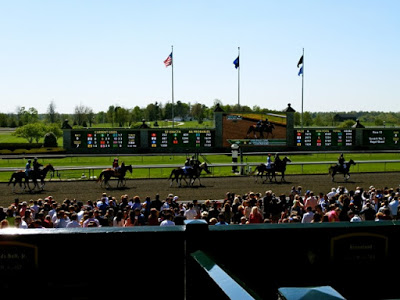
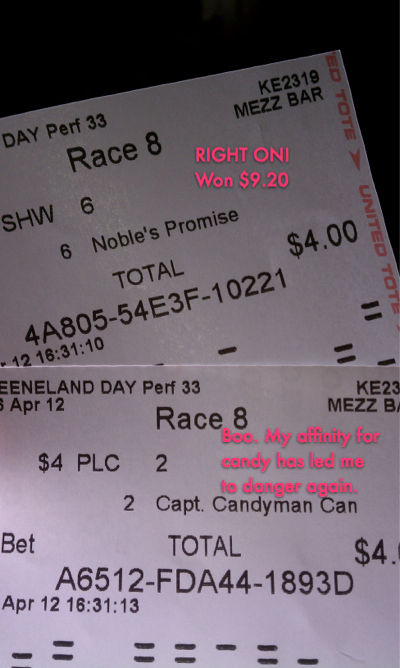
April 6th was opening day of the 2012 Keeneland Spring Meet. I ventured out on opening day with some friends to celebrate my birthday. We sat in a box for probably the first and only time as I won it as a silent auction item for a local charity. Keeneland boxes are at the bottom of the grandstand (mezzanine level) and aren't available for purchase. They've each got a plaque on them with the name of the box owner. Lots of horsemen and old blood in Kentucky. Many of them sit empty during the races: if the owner doesn't have a horse running, they might not be in town.

Anyway, it was beautiful.


During my time in Kentucky, I've come to realize that not everyone knows about horses, and not everyone is an expert in making bets at the track. Some of those who study the racing forms judiciously end up leaving with empty pockets, while others with dumb luck (like myself) leave with enough money to pay for valet and the bourbon consumed while betting. That's what I call winning!

Here is my completely unscientific betting strategy.

Rule 1: If the name resonates with you, bet on it.  This name had "mac" one of my favorite foods, combined with "mayo," a condiment that I abhor. Alas, it was a loser.

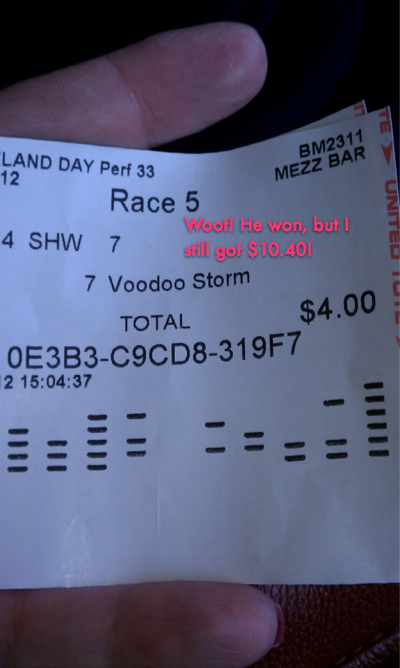
Rule 2: If you lose your first bet of the day, you need to make 2 bets on the next race to recover your money. I chose these because they weren't favorites, but they weren't longshots. Guessed correctly on both! (Error in the photo, the Don't Tell Sophia bet yielded $9.20 since it was a $4 bet)

Rule 3: Forget the "strategy" you used to win in the previous race and pick a name you like.  This was a long shot, so I picked him to show. He ended up winning. No complaints from me!

Rule 4: Actually remember the name "Noble's Promise" from a bumper sticker you see in your neighborhood every day. It says "I believe in Kentucky-bred Noble's Promise." Remember it was a Derby horse last year. Bet on it. Make money. Next, pick a name you like. This is probably no coincidence that the name I like is related to food. See Rule 1: Mac & Mayo.

Tell me: How do you choose your bets?

Read More

Kentucky Places: Keeneland

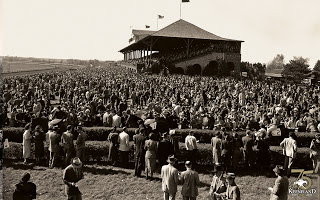
1949 crowd scene, via Keeneland.
When the HerKentucky team put together our list of Favorite Things earlier this year, it was no surprise that most of us mentioned Keeneland.  It's pretty much a universal thing -- everyone who's spent any time in Lexington loves Keeneland.

One of my very favorite things about going to Keeneland is that the track is always catching my fancy in new and unexpected ways.  Sometimes, I'm overcome by the majesty of the horses and the thrill of the races.  Other times, I'm struck by the beauty of the grounds, completely amazed that I'm standing less than a mile away from the clutter of the airport and the sprawl of Man O' War Boulevard.  Some days, the track is so filled with friends, classmates and acquaintances that I barely have time to place a bet amidst all the catching up.  Most often, however, I find myself getting lost in romantic notions of the track's 75 year history. 
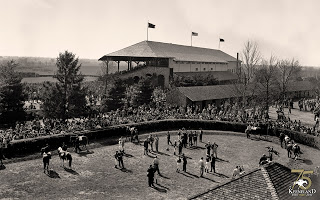
1950 Paddock scene, via Keeneland.


Now, I love hearing about the glory days of horse racing.  I simply can't get enough of those movies like Seabiscuit and Secretariat, or any of those racehorse biographies, or any other stories of the history of the sport.  I love the idea that racing was once  a national phenomenon, and I am fascinated by the idea that thoroughbred racehorses were once celebrated as celebrity athletes.  Every time I walk the paddock at Keeneland, I envision a time long past, when everyone took horses as seriously as we do in Lexington.
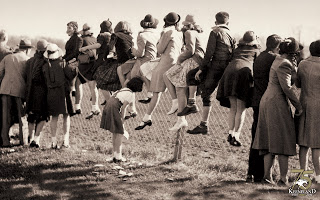
via Keeneland.

  What's your favorite part of a trip to the track?


{You can read more thoughts on Keeneland from the HerKentucky team here. My article in the latest issue of Ace Weekly magazine provides an overview of the Keeneland experience for first-timers.}
Read More

Staycation


We didn’t go anywhere for Spring Break. In fact, it feels like I’ve been in Kentucky for the past five years. Something about having a baby is not conducive to vacationing. Go figure.

I love Kentucky. Don’t get me wrong but any place can start to feel like a cage after too long.

In a desperate attempt at a getaway, we left Thursday afternoon for Kentucky Lake for a long Easter weekend away with family. I’ve written about my love of the Lake before but this trip was a little different. I don’t think I’ve ever spent substantial time on the Lake this early in the year. And while it’s been warm, it hasn’t been warm enough to enjoy the traditional water-based activities.


So, on Friday, my grandmother and I took Griffin the Golden Pond Planetarium at Land Between the Lakes. My little boy has been particularly fascinated with the sun, moon, and stars of late so I started searching for an outlet a couple of weeks back. I’m embarrassed to admit I didn’t even know Land Between the Lakes had a planetarium.
I was surprised to see the extensive schedule and we ended up seeing a show in the afternoon about the IBEX. It was a little advanced for a two-year-old but he still loved it and we got the schedule for summer night observations in the observatory.

We had a wonderful afternoon and the planetarium wasn’t the only surprise. As we drove the length of LBL (thanks Foss Maritime!), I couldn’t believe how much it had to offer. From elk and bison to hiking trails galore, I saw an entire summer of adventure stretching in front of us.

I know it wasn’t an escape to a tropical isle. But just when I thought I couldn’t drive the same street one more time, it was nice to reminded there were roads left untraveled so close to home.  

~ Sarah Stewart Holland 
Read More

Race Recap

Today, a few days out from the Run the Bluegrass half marathon, I can truthfully say that I only have positive memories of the race. At the time, I thought I’d never forget the searing pain in my hamstrings or the growing animosity I felt toward the hilliness of the Bluegrass. In the moment, the race was physically and mentally difficult. In retrospect, it was nothing but inspiring.
2012-03-31 07.46.46
At the starting line, I saw a woman with a t-shirt that read, “I’m a Stage 4 cancer survivor. I run for those who can’t.” I got choked up at that. It put things into perspective.
Somewhere around the 3 mile mark, I got to read the cape of a woman in front of me. Hers was another inspiring story. It read:
WONDER WOMAN. Heart attack survivor – 1/2/12.
I picked up the pace and carried on a little conversation with her, telling her that I was so impressed. She said that her heart attack wasn’t going to slow her down. Shortly after she got out of the hospital, she was on the treadmill and ready to go. She was wearing a heart rate monitor and was determined to finish. I wish I’d checked out her bib number so I could see how she did.
I know these weren’t the only two stories of normal, ordinary people overcoming adversity. Maybe they were extreme instances, but every runner out there had overcome something to give it their best that morning. I’d overcome a fear of being considered too out of shape to ever run.
After the race, a lot of people – friends and family – told me they were proud of me because they could never imagine running a half marathon. My advice to them was to find something equally as scary, to set their mind to it, and accomplish it. My half marathon doesn’t have to be your half marathon. Maybe your half marathon is swimming a certain number of laps in the pool. Maybe it is walking to the end of the driveway. Maybe it’s approaching your boss to negotiate a better work situation or salary for yourself.
It’s all about the challenge and the preparation to accomplish the goal. The medal at the end is just a sweet reward.
run the bluegrass medal
Read More