
How to Make a Needlepoint Belt, Part One
Step-by-Step guide to creating a needlepoint belt.
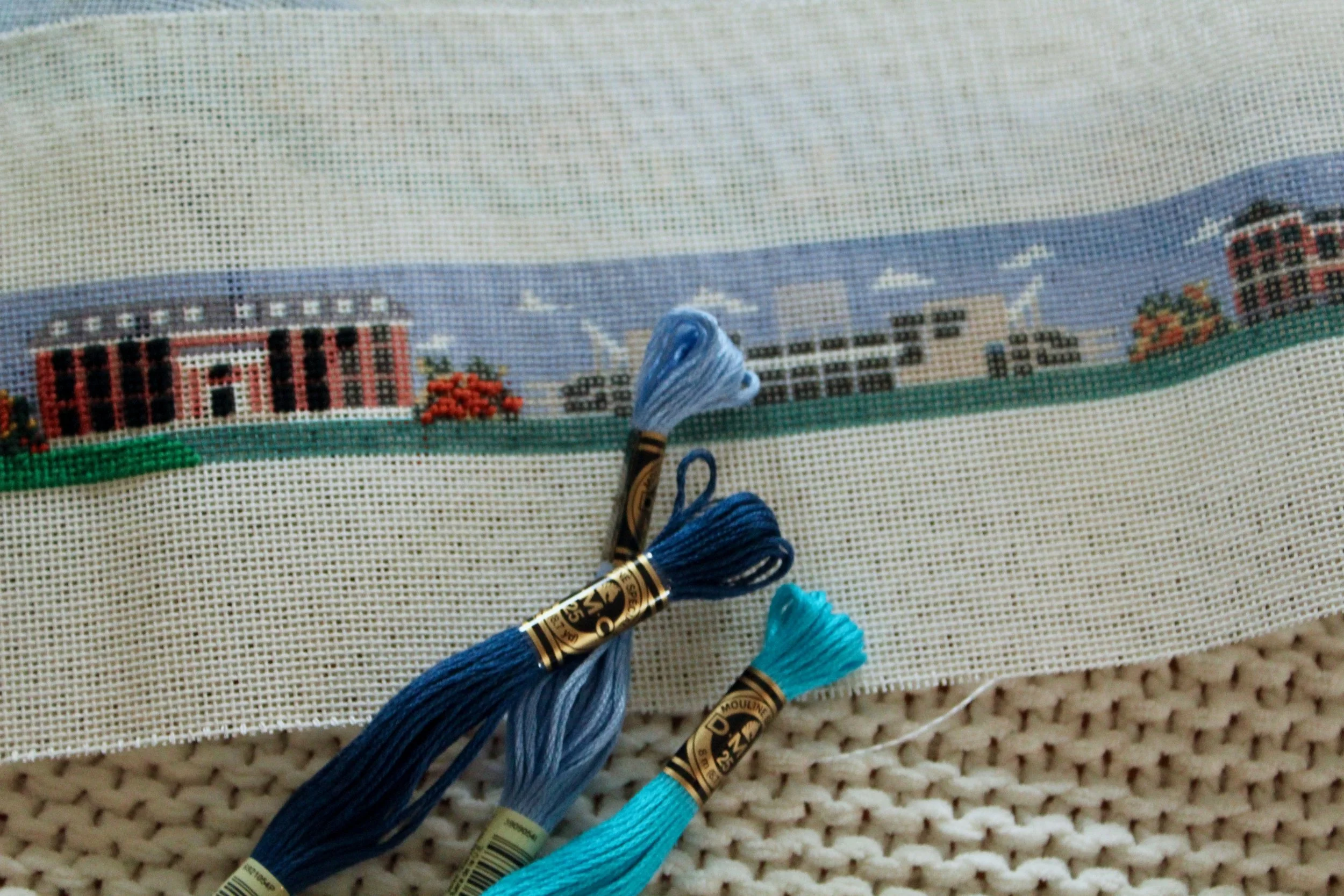
Over the past year or so, I’ve found myself really interested in needlepoint. It’s a hobby I’ve picked up time and again for well over 20 years, since my undergrad days at Transylvania. I absolutely love making needlepoint belts. They're such a fun project to undertake, and they make incredible gifts!
Over on Instagram, I’ve posted some photos of belts I’ve made or works in progress, and have had a lot of questions about how to get started. Today, I’ve teamed up with NeedlePaint, a custom needlepoint company, to give you a step-by-step guide!
Step 1: Determine your project!
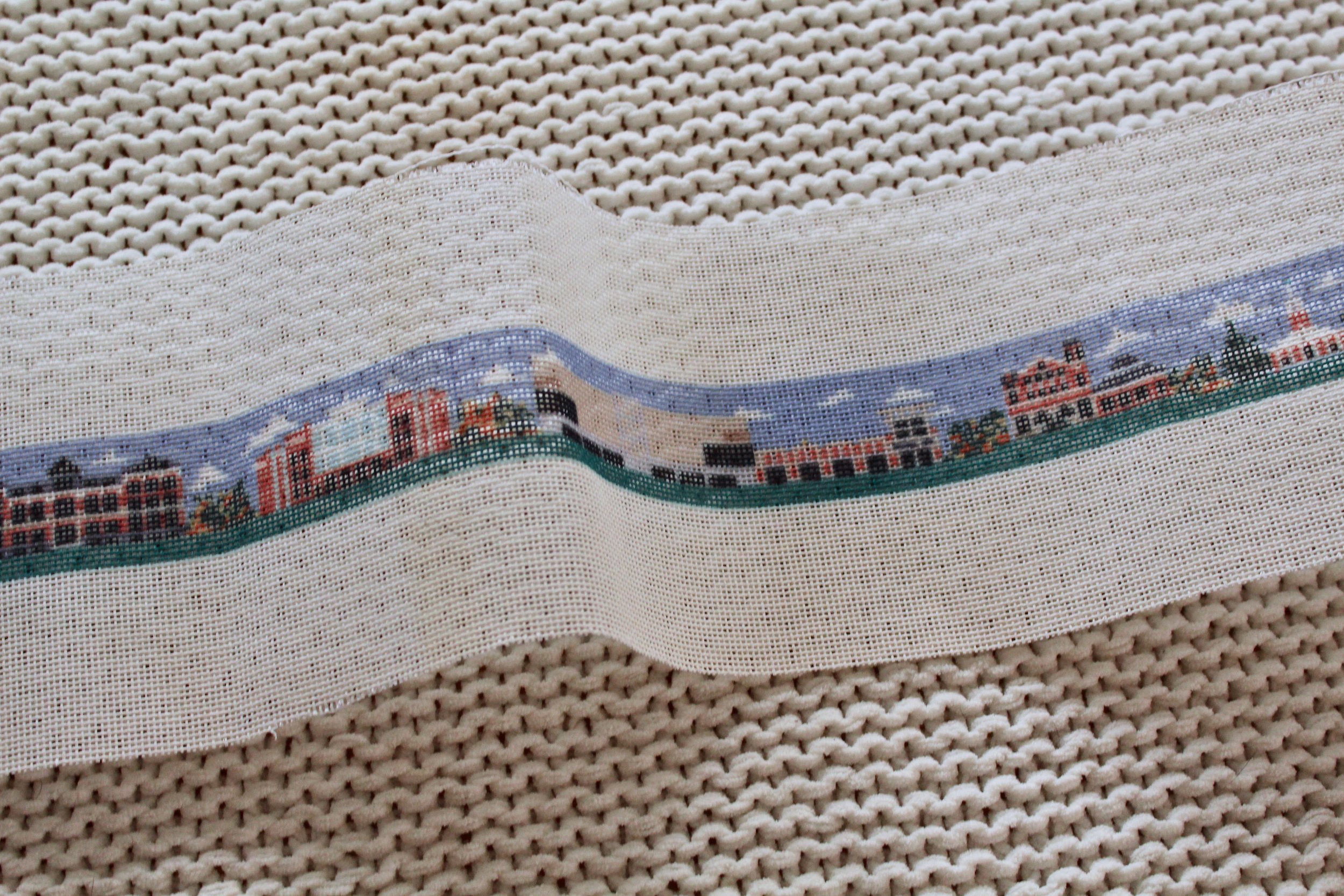
Are you making a belt, dog collar, key chain, or sunglass strap? These questions weigh heavily into how much time and money you’ll spend on the project. It might be best to start with something small like a dog collar, or a pattern that doesn’t involve a lot of tiny detail. You’ll probably find that you get the hang of it in a hurry and are ready to move on to a more complex project fairly quickly!
What materials are used in your belt kit? I can’t stress this enough. If it’s your first belt, then you’ll want to purchase a kit that has all of your materials together! As a general rule, the folks who sell the canvas are going to be better at selecting the appropriate threads and needles than you are. Let them kit your thread so that you have the correct colors, and the appropriate thread and needle sizes. Here are a few things you’ll need to know about the materials:
The canvas comes pre-painted on a mesh canvas. Mesh is graded into different sizes. The number on the mesh is determined by the number of holes per inch. So, an 18 mesh canvas has more holes per inch than a 14 mesh or a 12 mesh. This, in turn, determines the type of thread you’ll use. You may use DMC brand thread in Pearl Cotton sizes 3, 5, or embroidery floss size 25. These threads are also denoted by a color number. It’s a lot to learn, and it’s way easier to let the professionals choose the threads for you. If you have an option to choose the mesh (Needlepaint has a great blog about this here!), you should consider that a very small canvas (i.e., an 18 mesh) is going to take a longer time to complete and may be more difficult for someone who is very far-sighted or has a history of tendonitis or carpal tunnel in their dominant wrist. (I learned the hard way that I need to wear a wrist brace if I’m going to do a lot of needlepointing!) Don't be shy about asking your needlepoint shop for specific details. You can contact NeedlePaint here to ask more questions about your project, and you can rest assured that their products have a 100% satisfaction guarantee!
Step 2: Choose Your Pattern!
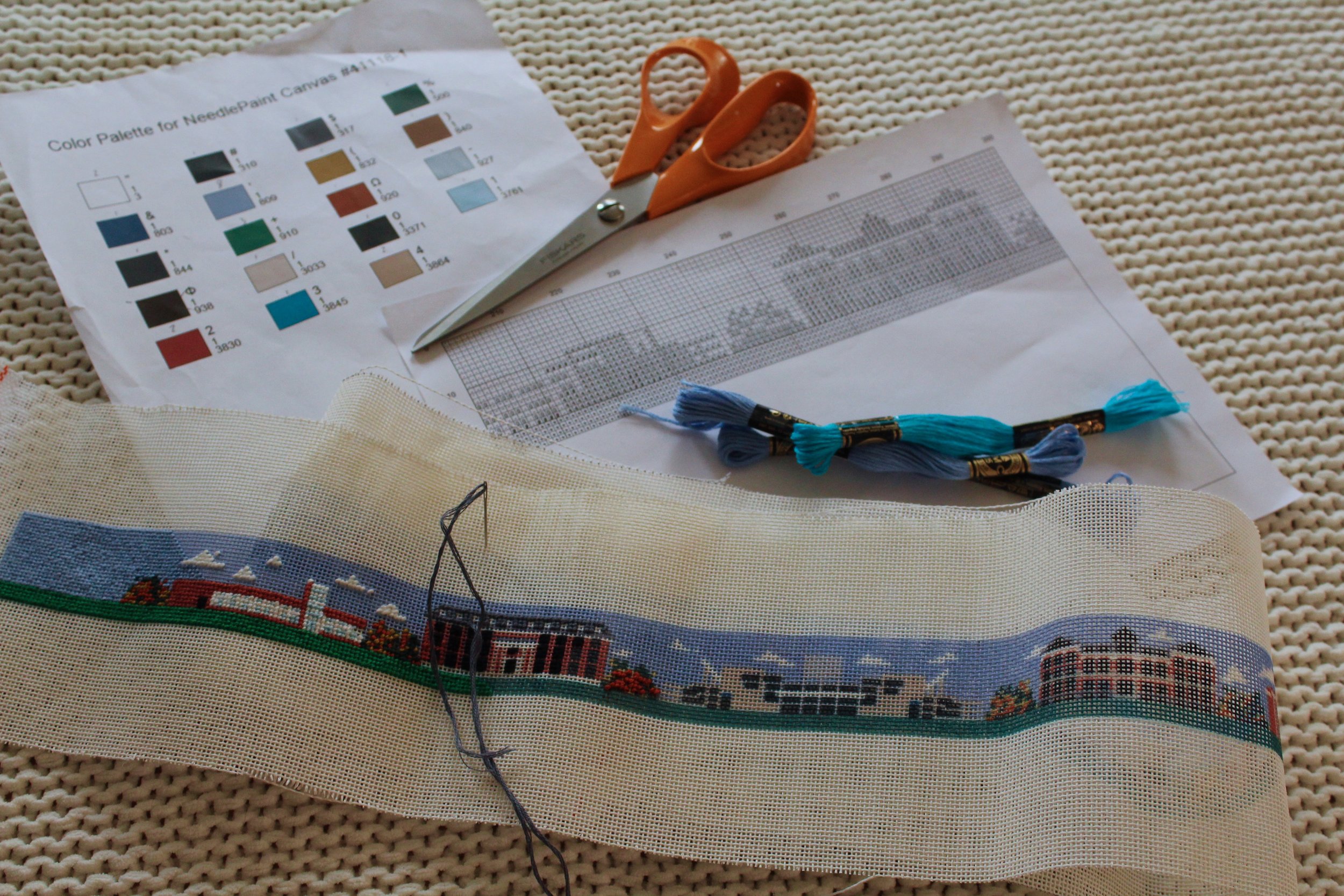
This is the fun part! You’ll want to pick out a pattern that really speaks to your recipient’s personality. This is a keepsake, so you probably want to go with an interest or hobby that is important to the person who’ll be wearing the belt. Some folks love to go with the customized hobby/ memory belt that commemorates several of the wearer’s hobbies; I’ve made one like that for my dad.
As for this project, I’ve made UK logo belts for Bob in the past, as well as a Bourbon Trail theme. This time, I went with a lovely, intricate pattern that depicts UK’s campus. Since both Bob’s law degree and his MBA are from the University of Kentucky, it seemed like both a fun commemoration and a clever way to show team spirit. I love that they combined images of older buildings like Bowman Hall and Memorial Hall with the sports stadiums — both Rupp Arena and Kroger Field! — as well as newer buildings like the WT Young Library and landmarks like the Arboretum. It really is a great design for someone who loves UK’s campus!
Now that you and your needlepoint store are on the same page about everything — the pattern, the colors, the initials, etc., there’s just one more thing to do before checkout: Measure Again!!! You’ll want to make sure you’re working with the vendor to ensure a properly fitting belt. NeedlePaint does a great job explaining their sizing system here.
Step 3: Start Stitching!
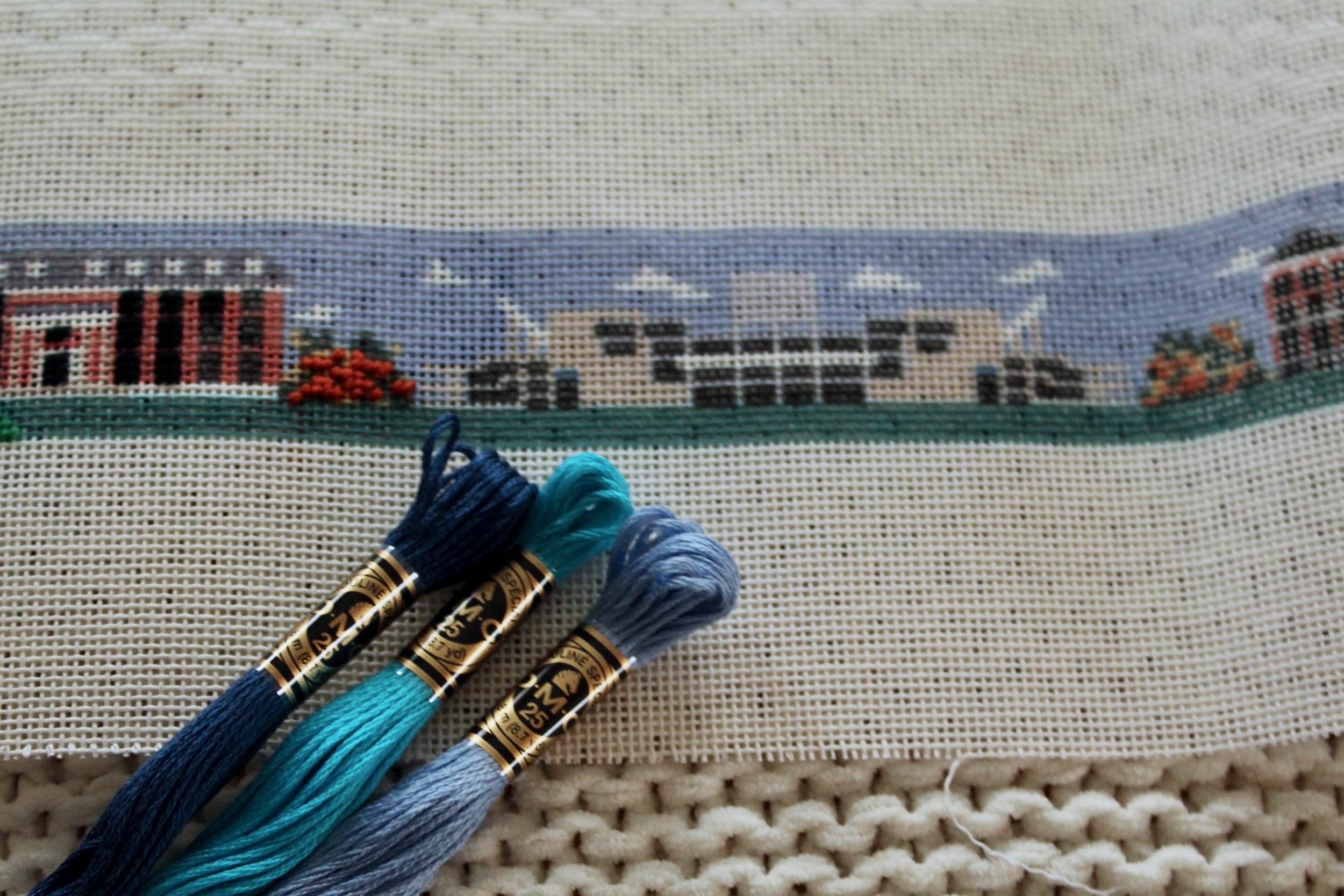
You basically are just going to do a single, diagonal stitch in correspondence with the painted design on your belt canvas. The only stitch you have to know is the continental stitch (This guide from DMC explains it way better than I ever could!), but I often add in a basketweave for stability. You can find a lot of great information on the internet, and the NeedlePaint blog has a wealth of information. I love that my NeedlePaint canvas not only has the design painted on the canvas, but also includes a full pattern that lets you know which color of thread to use on every single hole. As you can imagine, the UK campus belt utilizes several shades of blue. The pattern guarantees that I select the right thread for every stitch!!
I’ll post Part Two, How to Finish and Leather Your Belt, soon! Thanks so much to NeedlePaint for partnering with me on this project!
Let me know in the comments if you’ve ever made a needlepoint belt!
How to Taste Bourbon Like a Pro
Step-by-step guide to tasting Kentucky bourbon

Kentucky bourbon is bigger than ever. Of course, 95% of the world’s bourbon is made here in the Commonwealth, as is 100% of the bourbon that’s worth talking about. It’s an $8.6 billion dollar industry that generates over 20,000 jobs for Kentuckians. Bourbon impacts every Kentuckian. But, no matter how hot the industry is, I’ve noticed that there are plenty of Kentuckians who are still a little scared to drink bourbon. It’s a question I get fairly often from blog readers and social media followers: How do I get started with tasting bourbon?

As a bourbon writer, I’ve had the incredible opportunity to attend tastings led by some of the most interesting names in bourbon. I’ve watched the legendary Fred Noe of Jim Beam demonstrate his “Kentucky Chew” technique, participated in an intensive sensory tasting session led by Elizabeth McCall and Chris Morris of Woodford Reserve, the masters of (click here for information on how you can attend Woodford Reserve Tasting Academy, which I promise you’ll want to attend!), and been among the very first media members to sample the most recent Angel’s Envy offerings. I’ve picked up a few tasting tips along the way, and I want to share them with y’all.
Setup:
Now, it’s great if you have the opportunity to go to a tasting led by a professional. If you’re in Louisville, there are great classes at Westport Whiskey and Wine. Lexington and Louisville both have fantastic classes at Total Wine and More. And, of course, there are tasting opportunities on all of the distillery tours. But, it’s also pretty cool to setup a tasting at home, so you can learn about your own palate as well as your friends’ and family’s.

Step 1: Select your Whiskey.
If you’re going to have a whiskey tasting, you’ll want to select a whiskey. Now, many Kentucky distilleries produce a bourbon and a rye. These are both types of whiskey, and can be produced using the same equipment. Absolutely NOTHING marks you as an amateur quicker than calling a rye whiskey a “bourbon.” If you take one thing away from this blog post, please remember that. The main difference is the grain content. Bourbon whiskey must have a recipe, known as a mash bill, of 51% corn or higher, while the mash bill of rye is at least 51% rye. I find that, when selecting whiskeys to taste, it’s good to pick a theme. I often go by distiller. When sampling the new Old Forester Rye, I tried it against the Old Forester Signature Bourbon, as well as the Woodford Reserve Rye, as these were all produced under the supervision of the same Master Distiller, Chris Morris, under the two major Brown-Forman labels. Another easy starting point would be to try Maker’s Mark with Maker’s 46 or Woodford Reserve with Woodford Reserve Double Oaked. These comparisons will show you how the very same bourbon develops a different taste when finished in different barrels. You can also choose a flight consisting of one from different categories — wheated, high-rye bourbon, rye, etc. — to really see the differentiations. There is a great guide to hosting a tasting on the Kentucky Distillers Association website, and all of the major brands have really good information on their websites to help you learn about what you’ll be tasting before you buy.

Step 2: Set it up.
There really is no tasting glass like the glencairn for tasting. The tulip-shaped glass helps you experience the aroma of the bourbon as it’s supposed to be. If you don’t want to invest in tasting glasses just yet, you can use rocks glasses. Set up each tasting station in the same order, pouring about an ounce of whiskey into each glass. We’re not here to take shots or get drunk. The idea is to have enough juice in each glass to get an idea of how it tastes. Set your samples out in ascending proof order, so that a higher proof won’t overwhelm the flavors of a lower-alcohol spirit.

Step 3: Accoutrements
Turns out, you actually do need a few more things on hand for a bourbon tasting than just bourbon and glasses. Who knew, right?!?! You’ll need some good quality, flavor-neutral water. Here in Louisville, the best thing is actually our award-winning tap water, but to paraphrase Ina Garten, bottled water is fine. The water serves both as a palate cleanser and, if needed, for a drop or two to dilute the spirits. Sometimes, after the initial taste of the whiskey, it’s nice to add a little water (no more than a drop or two) to cut the proof and really dig into the flavor.
You’ll also want some crackers, bread, or popcorn to serve as a palate cleanser while tasting. And, although we’re limiting the amount of alcohol that’s being consumed in the tasting, you’ll want to have some appetizers or snacks on hand to offset the intoxicating effect. It’s also interesting to try some different food samples with your whiskey tasting to coax different flavors out of the drink. The Woodford Reserve flavor wheel tasting calls for aged parmesan, toasted hazelnut, dried cranberry, an orange slice, dark chocolate, and sorghum. I often make some substitutions when playing around with food pairings: I like Kerrygold Dubliner cheese rather than parmesan, and often use fresh or dried cherries and toasted pecans — these are just my taste preferences, and serve a similar purpose in drawing different notes out of any whiskey, not just the Woodford expressions.

Tasting
So here’s the thing. You honestly already have the only tools you need for a bourbon tasting: your own taste buds and curiosity. The most important thing here is taking the time to really be in touch with the sensory experience. Don’t let yourself fall into the trap of liking what you’ve heard is good, what “the experts” like, or what the people around you say is good. You know what you enjoy. You know if you like Brussels sprouts or red meat or chocolate cake, right? Well, bourbon is no different. Different people have different palates and enjoy different spirits. At the heart of it, that’s how the bourbon industry came to be.

Step 1: Color
The first thing you’ll notice when approaching your bourbon samples for tasting will be the color. The color actually does play a huge role in the tasting experience. The shade of amber of a particular whiskey will often be determined by its proof, age, and degree of barrel char. The above photo is a great illustration of how color predicts the character of a bourbon. Two Coopers’ Craft expressions were made from the exact same mash bill. The original Coopers’ Craft is an 82.2 proof, aged in charred barrels, while the Coopers’ Craft Barrel Reserve is 100 proof and has been aged in a specially chiseled barrel. Both of these factors impact the color of the bourbon, and give you the first clues about how it will taste. Predictably, the sample on the right, the 100 proof, has a far bigger and more complex flavor.

Step 2: Aroma
Your sense of smell has a huge impact on any food or drink that you taste. To get a full sense of a bourbon’s flavor, you should take the time to give it a good sniff before you taste it. Now, to the beginner, the first notes you’ll smell in any bourbon whiskey will probably be vanilla and caramel. These are characteristics of all bourbon whiskeys; they are the result of aging the spirit in charred oak barrels. Sometimes these notes linger beyond your first whiff, and they’re still pretty wonderful. As you smell the spirit, you’ll probably pick up on some other notes, too. These are the result of the specific yeast strains, grain varietals, barrel chars, maturation techniques, and everything else that goes into making a specific whiskey. Pay attention to what you smell. There are no wrong answers. I find that most of the Brown-Forman brands have a really strong pear note. Maker’s Mark expressions smell like creme brûlée. Explore the aroma for yourself and note how smells you enjoy play into flavors you like. If a whiskey has a strong raisin note and you hate raisins, then you’re probably not going to enjoy that spirit. Also, it’s very interesting to see how different conditions — a hot or cold day, how you’re feeling, etc. — play into the aroma you experience for a whiskey. It’s very common to smell something different in the same whiskey on a different day, even for folks who have a highly trained and developed palate.

Step 3: Taste
We’ve spent a lot of time getting to this point, haven’t we. Especially since the goal was supposed to be tasting a whiskey. Well, here we are.
Take a sip. See how it tastes on different parts of your tongue. Really think about the flavors you’re pulling out of the whiskey. Pay attention to your initial, emotional responses. Maker’s Mark always tastes like Christmas to me, both because of its elegant caramel and vanilla notes, but also because of the sensory memory of my great-aunt’s bourbon balls, which she always made with Maker’s Mark. You may sense a nutty flavor or a fruity note; subsequent sips or dilution with water will probably help you figure out what kind of nut or fruit. . If you’re tasting with other folks, you may hear them talk about notes that you absolutely do not taste; this is absolutely normal. There are usually some big notes that everyone experiences, and then other flavors that are way more about the bourbon’s impact on the individual. Some of the most experienced Master Distillers and Master Tasters and bourbon pros I’ve ever met will tell you the same thing: There is no right or wrong way to taste, and everyone picks up on a little something different. Trust your palate and your experience more than reviews, price point, or prestige. I promise this will make you a happier bourbon drinker.

Step 4: Finish
Think about the flavor the whiskey leaves in your mouth after you swallow (or spit) it. Maybe there’s a cinnamon note, or citrus fruit. It’s the final impression of the whiskey, and it often is a little more complex than the first taste.

Step 5: Record it
So, this is totally optional, but I find that the best way to develop my taste in bourbon is to keep a tasting notebook. I use this one, which is popular among the bullet journal crowd. I find that keeping my notes organized helps me to really compare flavors and experiences. I can look back on what I tasted in a specific whiskey and see if I taste the same notes again. It’s a great way to help me recall what I’ve tasted and what flavors I’ve tasted. If you’re interested in taking up bourbon tasting as a semi-serious hobby, I recommend journaling it.
Cheers, y’all! Let me know in the comments if you’ve ever done a bourbon tasting at home or at a distillery!!

Batdorf & Bronson Dancing Goats and Whirling Dervish Coffee Reviews
Tasting notes on extraordinary cult-favorite small batch coffees.

I’m so excited to share a series of coffee tasting notes with y’all over the next few weeks! I’ve teamed up with Batdorf & Bronson to review some of their amazing coffee roasts with you.
Batdorf & Bronson is an Olympia, Washington-based coffee company known for their cult-favorite Dancing Goats® Blend. Dancing Goats is, far and away, Bob and my very favorite coffee. This stuff is our Pappy Van Winkle, y’all. We order it by the 5lb bag. We fell in love with this coffee over a decade ago when we lived in Nashville; there was a lovely (and sadly now closed) little cafe just off Vanderbilt’s campus and a few minutes away from our condo. We spent the loveliest Saturday mornings there, catching up on the week and drinking Dancing Goats. It was the first coffee that made me realize I love coffee, rather than just needing the pick-me-up. We’ve been devotees of the blend ever since, and it’s what we grind at our house for everyday use.

The coffee’s name, Dancing Goats, comes from the legend of coffee’s discovery. In 9th century Abyssinia, now known as Ethiopia, a goatherd named Kaldi is said to have noticed that his goats were happier and more energetic after eating the berries from one specific shrub. Kaldi soon joined suit and tried the berries, which are what we now know as coffee cherries. Kaldi’s dancing goats, it is said, discovered the magical properties of coffee!
Here are Bob and my tasting notes from a recent tasting session.
Dancing Goats Tasting Notes:
Roast: Dark
Nose: The whole bean has a very strong note of dark chocolate; upon grind, a black cherry aroma emerges.
Taste: Strong notes of chocolate and spice.
Finish: Bright citrus finish on the deeper, like a naval orange or clementine.
There is such a strong pop to this coffee. It’s just so flavorful and delightful. It works as your morning wake-up and your evening wind-down. It’s the coffee Bob and I always come back to; it’s such a sophisticated and complex flavor. (And it’s fantastic with a little dash of cinnamon to enhance the flavors!) We tasted for this review using a french press brewing process. This coffee is also great in drip process and as an espresso. The french press process certainly brings out the chocolate notes in the roast!)
Dancing Goats is the signature coffee blend for Batdorf & Bronson Roasters. Their coffee houses in Olympia and Atlanta bear the Dancing Goats name.
We tasted Dancing Goats alongside a french press of another of Batdorf’s longtime roasts, Whirling Dervish. This one is also named for a figure in coffee lore: Omar, a mystic (and later saint) who is credited with first preparing coffee as a beverage.
Whirling Dervish Tasting Notes:
Roast: Dark
Nose: The whole bean has a strong aroma of peanut butter; upon grind, a cocoa aroma emerges.
Taste: Earthy notes of cocoa and toffee.
Finish: Sweet and spicy, with hints of molasses.
Bob’s initial thoughts on this one were that, in comparison to the Dancing Goats, this one is sweeter and brings out less prominent notes. It would be a very good coffee to complement food, as it isn’t going to overpower your flavors. I’ve since used it as an espresso brew in a latte, and it made an extremely balanced and rich cup.
Both Dancing Goats and Whirling Dervish are also available in decaf roasts, if that’s your thing.
Please note that all Batdorf & Bronson coffee bean orders are roasted to order to ensure maximum freshness. Allow extra time for your coffee delivery.
{Batdorf & Bronson provided me with coffee beans and promo merchandise for an honest review; all opinions are our own!}

Angel's Envy Oloroso Sherry Cask Finish Bourbon Review
Tasting notes on a very limited edition bourbon expression.

Last week, I attended a media preview and tasting of the latest release from Angel’s Envy: Oloroso Sherry Cask Finish Bourbon. Angel’s Envy is one of those small, family-owned whiskey labels that has a cult following — fans love the unique bourbon and rye whiskeys finished respectively in port wine or rum barrels to provide a gently altered flavor profile. The limited release Oloroso Sherry Cask Finish was a pretty big deal to bourbon geeks: it was the first new Angel’s Envy expression produced since 2013, and the first to be produced without the guidance of famed patriarch and Master Distiller Lincoln Henderson.

A mural at the entry of Angel’s Envy pays tribute to legendary distiller Lincoln Henderson
Lincoln Henderson was the Master Distiller for Brown-Forman for 40 years; he created the Woodford Reserve and Gentleman Jack expressions while at B-F. Lincoln retired in 2004, but by 2006 his son Wes persuaded him to come out of retirement work on a new, family-owned distillery project. The result was Angel’s Envy, a name paying humorous homage to the fabled “angels’ share”, the portion of the whiskey that evaporates in the warehouse each year. Mr. Henderson passed away in 2013 at the age of 75; Wes Henderson and his sons Kyle and Andrew continue to run the family business with an eye toward their patriarch’s vision.

Henderson Family Tree

Wes and Kyle Henderson sample new make.
After a quick tour of the distillery, Wes and sons Andrew and Kyle treated our media group to the first “outsiders’” taste of the new, limited edition bourbon expression, Angel’s Envy Oloroso Sherry Cask Finish.
Tasting Notes:
Proof: 100
Nose: Raisin and New Oak
Taste: Sherry, Raisin, and Hazelnut with a secondary toffee note.
Finish: Oak and Floral
This is a really unique expression. I LOVED the nose on this. It was this gorgeous raisin and oak scent that felt like a storybook holiday. The sherry definitely came through on the initial taste; we were told that Oloroso is a drier sherry, specifically chosen to keep the whiskey balanced and not overly sweet. I could see this making a really sophisticated and subtle Manhattan.
This is a very limited run of 3,600 bottles at $199 each. The whiskey will be available at the Angel’s Envy Distillery Store in downtown Louisville and distributed to a handful of Louisville area liquor stores. Public sales will begin on February 15th at 8 am; you can add your name to the VIP Access list by joining the Angel’s Envy 500 Main Club.

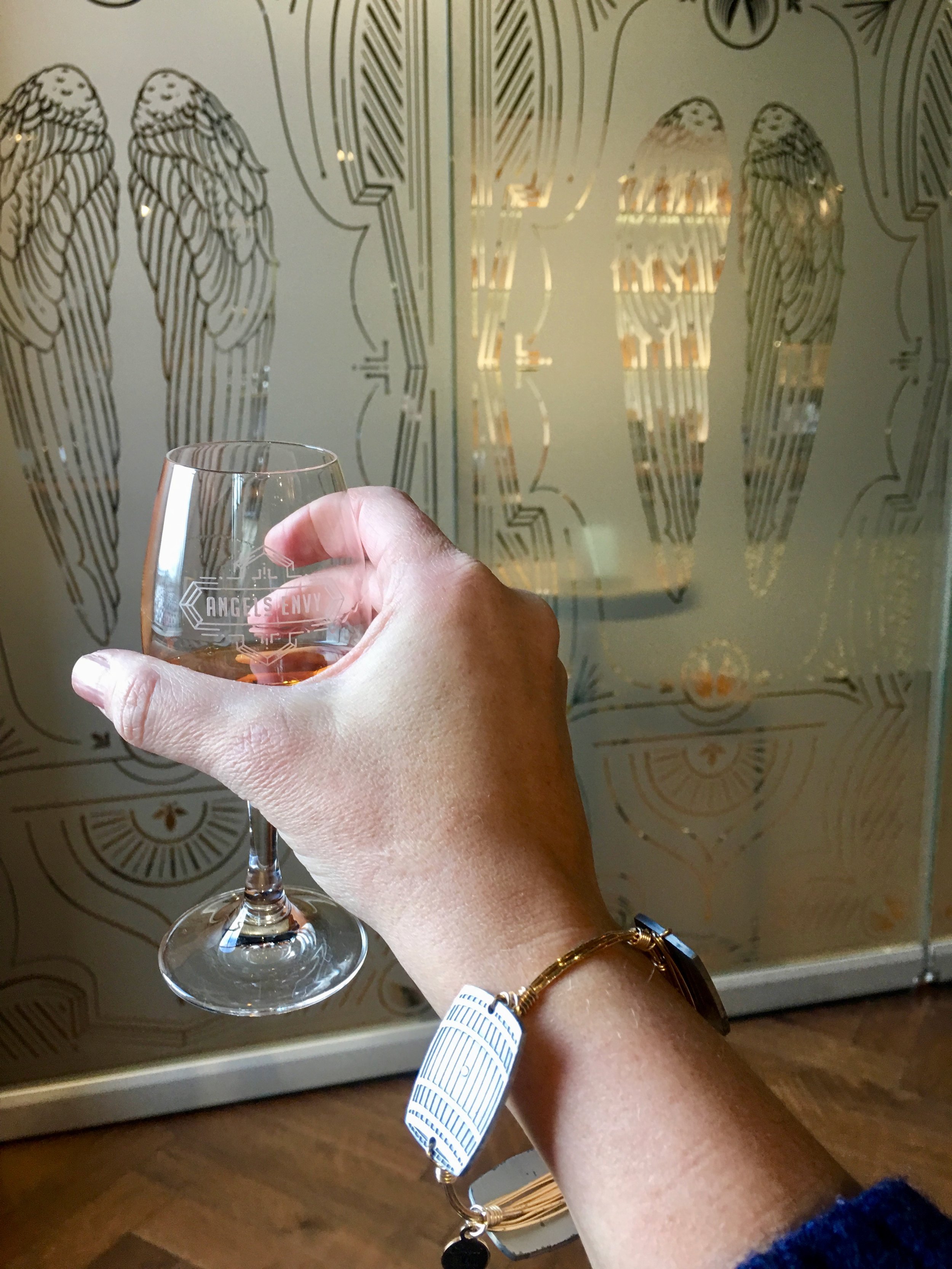
After the tasting and lunch, we were treated to a cocktail class with Finishing Room Bar manager Mike Bohn. Mike was so knowledgeable about the history of cocktails and the best ways to coax flavors out of the whiskey. You can sign up here for your own cocktail class.

Thanks so much to Angel’s Envy for the opportunity to sample this new expression!
BHO-CBD Oil Massage at Griffin Gate Spa
A relaxing and therapeutic massage utilizing BHO’s CBD oil!

{Please note that this review makes no claims of medical expertise; as a longtime suffer of chronic pain, I’m simply detailing my experiences!}
I recently had the opportunity to visit The Spa at Griffin Gate for a special massage incorporating Bluegrass Hemp Oil, a CBD extract. While I knew that CBD products are gaining popularity across the country, I didn’t know much about the product until my spa day at Lexington’s Griffin Gate Marriott. I was so pleasantly surprised by what I learned.
Bluegrass Hemp Oil was developed by a Lexington-area couple who wanted to find a safe way to control their son’s seizure disorder. CBD, or cannabidiol, is one of over a hundred cannabinoids found in cannabis plants. This is not a psychoactive or intoxicating substance, and it is grown legally in Kentucky in the hemp plant. Many studies have shown that CBD oils and supplements have shown long-term improvement for pediatric treatment-resistant epilepsy and seizure disorders as well as anxiety, movement disorders, and pain.

I was certainly intrigued to learn more. I’ve been battling a pretty severe flareup of my cervical disk injury (hello, 10 hours a day at the computer or iPhone!) and TMJ, as well as a larger-than-usually degree of stress, and this seemed like an interesting way to test a Kentucky-produced product for my pain. I have to say, I was a little skeptical going in. but this was an incredible experience. The massage therapist soon allayed my fears — she was initially quite concerned about the level of inflammation visible around my damaged disk and we literally watched and felt that inflammation subside as she worked the CBD oil into my neck. Bob noted that he could see the difference later that evening, as well. There is some evidence pointing to cannabinoids as substitutes for typical anti-inflammatory drugs, and I am cautiously optimistic about using BHO’s CBD oil as a topical treatment for some of my joint inflammation, as I am restricted from taking aspirin and other NSAID drugs due to a stomach issue. I am so looking forward to another CBD oil massage from Griffin Gate to help me better control pain chronic pain!


Thank you so much to Bluegrass Hemp Oil and Griffin Gate for the amazing tool they’ve provided me on my journey toward pain-free living. I can’t recommend the oil or the massage services at Griffin Gate highly enough! Y’all, this is a game-changer!
{I was provided a complimentary massage in exchange for an honest assessment of the service and products used. No additional financial compensation was provided; all opinions are my own.}

What Would Dolly Do Tee
New Dolly gear from Draper James and an opportunity to shop for a good cause!
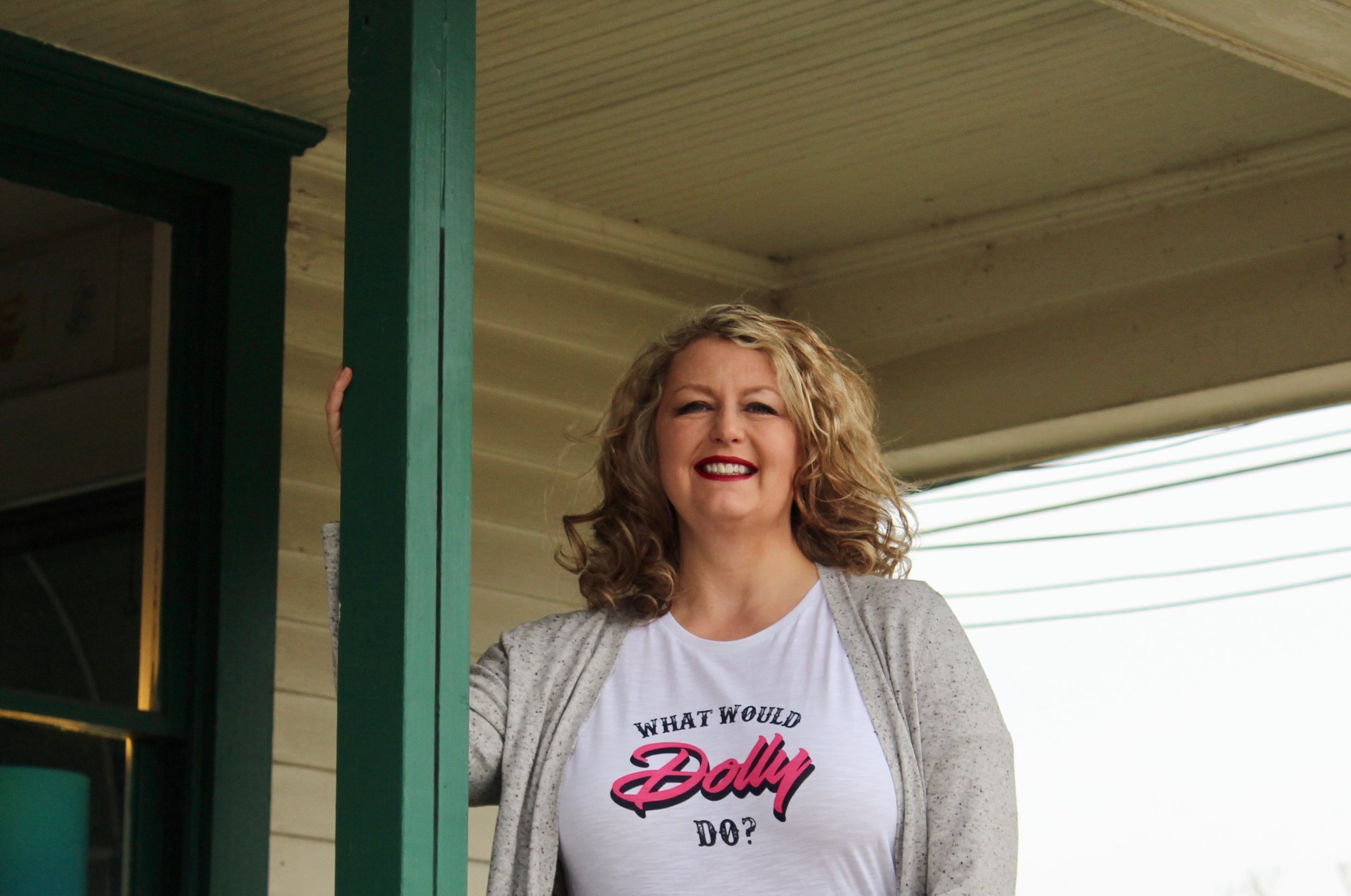
Y’all, Draper James redesigned the What Would Dolly Do? line, and it’s cuter than ever. Of course, I had to get the tee straight away, and the tote is on my wish list! I never miss an opportunity to tell the world how much I love Miss Dolly. (Click the photos below to shop the entire new collection!)
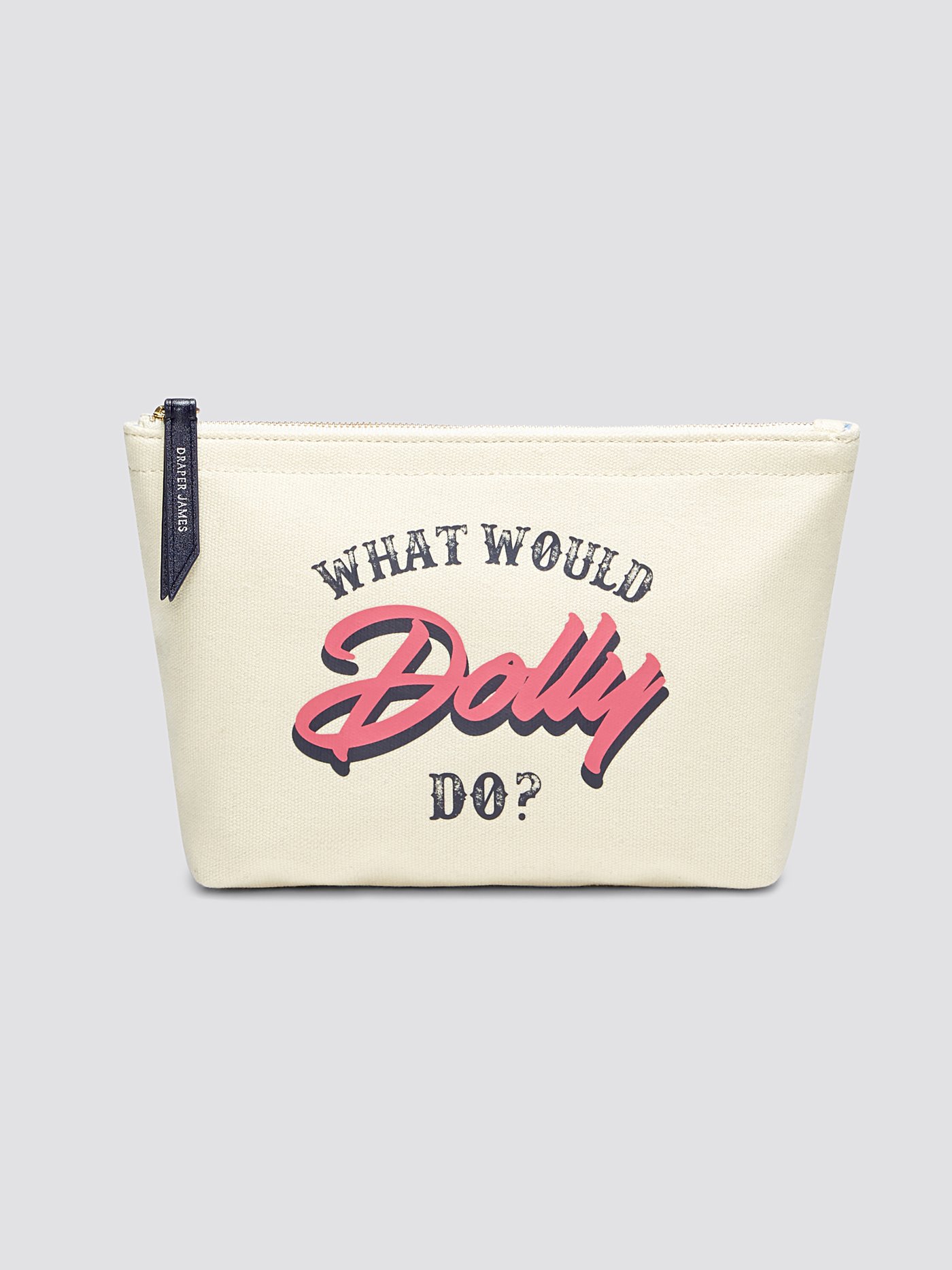
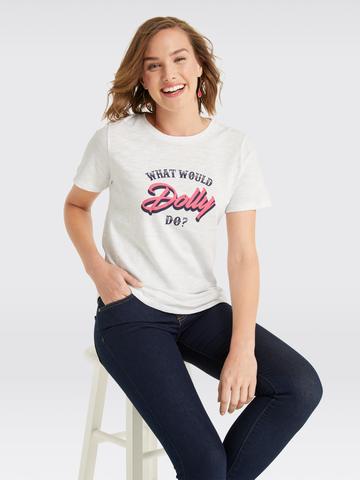
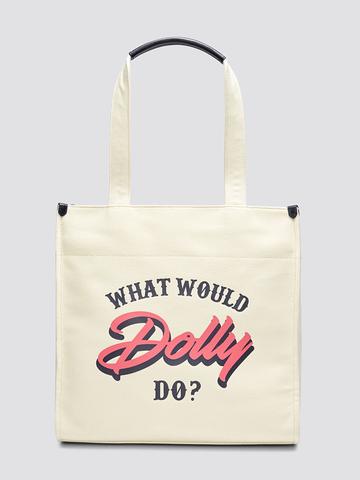
Shop the Dolly line and the rest of the Spring Collection with me at the Lexington Draper James store on Tuesday, February 26th from 6-8 pm and 15% of your purchase will graciously be donated to Dress for Success! I hope to see y’all there!


Old Forester Rye Whisky Review
An interesting and complex addition to the Old Forester whiskey portfolio.

{I was provided a press sample of Old Forester Rye in advance of release. All opinions are my own.}
I don’t know when I’ve so pumped about a whiskey release, y’all. When I heard about Old Forester’s new 100 proof Rye release, I was so, so excited. Old Forester Signature (100 Proof) is one of my all-time favorite bourbons, and I love what Master Distiller Chris Morris and Master Taster Jackie Zykan are doing to create new riffs on Brown-Forman’s flagship line.
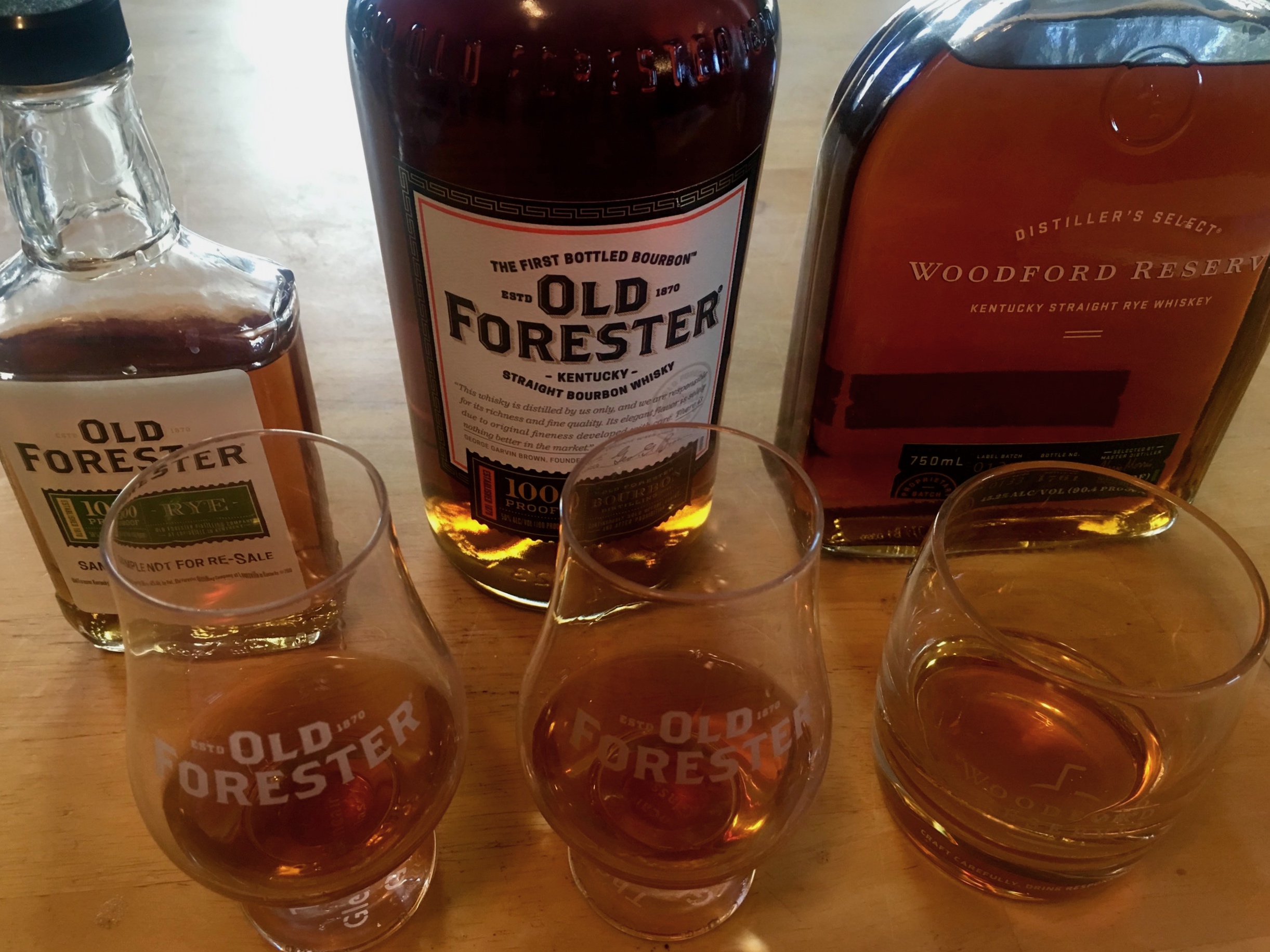
I set up a tasting flight to sample the Rye, both for comparison and to take an opportunity to revisit two of my favorite Brown-Forman pours. Along with the Rye sample, I tasted Old Forester 100 and Woodford Reserve Rye. Both Rye expressions have a lower percentage of rye in their mash bill — 53% for the Woodford and 65% for the Forester — while many other brands use up to 90% rye in their rye whiskey. The Woodford Rye is one we reach for frequently at my house; Bob especially likes it to balance out the sweetness in Old-Fashioneds or Whiskey Sours.
Tasting Notes:
I started with the Old Forester Signature as a baseline. As I said earlier, I love this one as a sipper.
Proof: 100
Nose: initial notes of brown sugar and caramel, opening up to butterscotch and oak.
Taste: apple & baking spice
Finish: apple & clove
Y’all, I love this bourbon. It’s versatile in cocktails and wonderful as a sipper. It’s at a fabulous price point, and it plays such an important role in Louisville’s bourbon legacy. Everyone should have this on their bar.
I moved on to Woodford Reserve Rye to switch over from a bourbon mashbill to a rye. I know that opinions on this one are fairly divisive, but I’m a fan.
Proof: 90.4
Nose: initial notes of rye and black pepper; as it opens, there’s a fruity depth and a buttery warmth.
Taste: spice, rye, & sorghum
Finish: apple
Moving from the robust 100 proof of Forester bourbon to the Woodford Rye was certainly noticeable. The lower proof does allow the buttery depth of the whiskey to open up a little more. I love the way this whiskey inverts both bourbon and rye mash bills as a spicy riff on Woodford Reserve’s bourbon expression.
These two favorites set up some pretty stiff expectations for the Old Forester Rye. I was pretty happy to see that this big whiskey lived up to my big expectations.
Proof: 100
Nose: starts out spicy, reminiscent of those cinnamon red-hot candies, before opening up to a buttery depth and notes of banana bread
Taste: rye grain, pear
Finish: peppery with a hint of lemon
I tasted this new against two of my go-to whiskies, and it did not disappoint. It certainly brings that fruit note that is prevalent across the entire Brown-Forman portfolio. The higher proof and spicier rye note differentiates this from both its bourbon sibling and its Woodford cousin. At $23 for a 750 ml, you should definitely have this on hand for both sipping and mixing. I think it would make a really nuanced Manhattan.

Old Forester Rye certainly lived up to my expectations. It manages to be at once unique and familiar, complimenting the 150 year-old Old Forester line in a smart and thoughtful manner.
(Editorial note: I use the American “whiskey” with an e in everyday usage. Brown-Forman rocks the boat by labeling Old Forester products with the Scottish “whisky” moniker, while their Woodford Reserve line is “whiskey”.)